
![French Press vs Pour-Over: Which Wins? [Taste Test]](https://caffeinecue.com/wp-content/uploads/2026/06/French-Press-vs-Pour-Over-Which-Wins-Taste-Test-1024x512.jpg)
Overview of Brewing Methods
French Press vs Pour-Over is a comparison between two popular coffee brewing methods that both deliver high-quality results. While each method uses a different extraction process, both are designed to create a satisfying cup of coffee with unique differences in flavor, aroma, and body.
Core Differences in Extraction
The French press uses an immersion brewing method, where coffee grounds stay fully submerged in hot water. This leads to a heavier body and stronger mouthfeel.
In contrast, pour-over relies on a controlled filtration process, where water slowly passes through the grounds. This method highlights clarity and precision in coffee extraction, often producing a cleaner cup.
Flavor and Sensory Profile
From a sensory analysis perspective, French press coffee is typically bold, rich, and textured due to the presence of fine oils and sediments. It enhances depth in the flavor profile.
Pour-over coffee is more refined and balanced. It emphasizes brightness, clarity, and subtle tasting notes, making it ideal for those who prefer a lighter cup with distinct aroma and structured taste perception.
Coffee Brewing Methods: French Press vs Pour-Over
Introduction to Brewing Choices
Selecting between a French press and a pour-over setup involves comparing two widely used coffee brewing methods that shape the final cup in different ways. Both techniques are designed for coffee extraction, but they create distinct results in taste profile, aroma development, and body texture.
Brewing Experience and Methodology
Each method follows a different brewing process that directly influences the final cup.
The French press works through immersion extraction, where coffee grounds stay in direct contact with hot water for a longer time. This approach enhances oil retention and creates a fuller, heavier cup.
The pour-over method uses controlled filtration brewing, where water is poured gradually through the coffee bed. This supports a more precise extraction control, allowing clearer separation of flavors.
Flavor Characteristics and Sensory Output
From a sensory coffee analysis perspective, both methods produce unique flavor expressions.
French press coffee is known for its boldness, stronger mouthfeel, and rich body intensity due to suspended coffee oils and fine particles.
Pour-over coffee delivers a cleaner, more refined cup. It highlights subtle tasting notes and improves flavor clarity, making it suitable for those who prefer structured and balanced taste perception.
Coffee Brewing Evolution: French Press vs Pour-Over
Historical Development of Brewing Techniques
The French Press brewing method traces back to the mid-1800s, developed through early European innovation by Mayer and Delforge. Originally called the cafetière, it uses a cylindrical container with a plunger and mesh filter. This design supports full immersion extraction, producing a strong coffee body, rich flavor intensity, and heavier mouthfeel.
The pour-over brewing method emerged later in the early 1900s, introduced by Melitta Bentz in Germany. She created a system using a ceramic cone and paper filter to reduce bitterness in traditional coffee. This method focuses on controlled drip filtration, enabling precise brewing control and cleaner flavor separation.
Brewing Innovation and Cultural Growth
Over time, both methods became important parts of global coffee culture and sensory brewing practices. The French press is often linked with relaxed routines and deep, bold coffee experiences, emphasizing a strong taste profile and full extraction of natural oils.

Pour-over coffee is associated with precision and craftsmanship. It highlights flavor clarity, aroma structure, and refined sensory perception, making it popular among those who prefer a clean and balanced cup.
Coffee Experience and Preference
From a contextual coffee analysis perspective, both methods serve different drinking preferences. French press delivers intensity, richness, and depth in sensory taste experience, while pour-over focuses on clarity, control, and subtle flavor expression.
Read Also: 6 Side Effects Of Coffee You Should Not Ignore [Alert]French Press Brewing: Flavor, Control, and Method
Core Brewing Process of French Press
The French Press coffee method is a classic immersion brewing technique where coarsely ground coffee is soaked in hot water and then separated using a metal mesh filter. This process supports full coffee extraction, producing a strong and textured cup.
Flavor Profile and Sensory Output
One of the main strengths of this method is its rich sensory flavor profile. Because the coffee grounds remain fully immersed, it preserves natural oils, fine particles, and aromatic compounds. This enhances body intensity, mouthfeel, and overall taste depth, creating a bold and heavy coffee experience.
Brewing Control and Customization
The French press allows flexible brewing parameter control, including water temperature, steeping time, and coffee-to-water ratio. These adjustments enable different levels of flavor strength modulation, making it suitable for both strong and mild preferences within personalized extraction settings.
Simplicity and Practical Use
This method is also known for its simple brewing system design. It requires no electricity and minimal equipment, making it practical for travel, outdoor use, and everyday home brewing. This contributes to its popularity in context-based coffee preparation environments.
Limitations and Extraction Risks
From an extraction quality perspective, the French press can sometimes produce bitterness. This usually occurs due to over-extraction or the presence of fine coffee particles passing through the filter. Proper timing and controlled steeping are important to maintain balanced flavor consistency.
Pour-Over Coffee Method: Precision, Clarity, and Control
Brewing Principle of Pour-Over Method
The pour-over coffee brewing method is a highly controlled drip extraction technique designed to highlight the natural complexity of coffee beans. Hot water is slowly poured over ground coffee held in a filter, enabling precise coffee extraction control and balanced saturation.
Flavor Clarity and Sensory Precision
This method is known for producing a clean and refined sensory flavor profile. Because water flows evenly through the coffee bed, it improves extraction uniformity, resulting in a crisp cup with distinct tasting notes, higher aroma clarity, and better flavor separation.
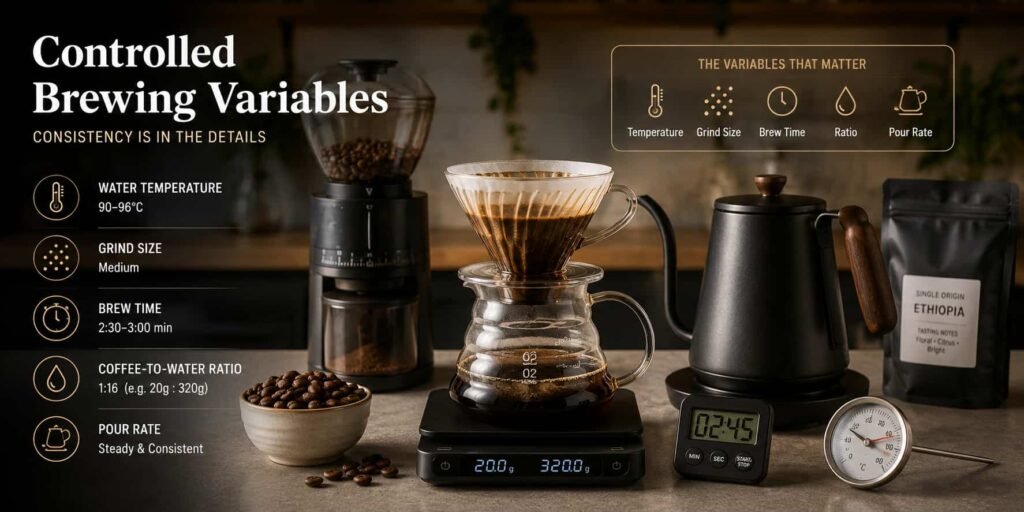
Controlled Brewing Variables
Pour-over brewing allows detailed adjustment of key brewing parameters, including water temperature, pouring speed, bloom time, and flow consistency. This level of control supports optimized extraction efficiency and enhances the final taste structure, making it ideal for specialty coffee preparation.
Brewing Experience and Craftsmanship
Many coffee enthusiasts view pour-over as a form of coffee craftsmanship ritual, valued for its precision and mindful preparation process. It emphasizes sensory engagement, patience, and attention to detail, creating a more intentional brewing experience.
Practical Limitations
Despite its advantages, pour-over requires more time, practice, and specialized tools such as a gooseneck kettle and dripper. This makes it less convenient for quick or mobile brewing scenarios and more suited for controlled environments focused on precision brewing workflow.
Final Choice in Coffee Brewing: French Press vs Pour-Over
Decision Overview in Brewing Methods
After reviewing both coffee brewing methods, the final choice depends on individual preference, lifestyle, and desired coffee extraction experience. There is no single best option, as both French press and pour-over deliver different forms of sensory coffee outcomes.
When to Choose French Press
The French Press immersion brewing method is ideal for those who prefer a strong, full-bodied cup with minimal effort. It supports rich flavor intensity, heavier mouthfeel, and simple manual brewing execution, making it suitable for quick and consistent preparation.
When to Choose Pour-Over
The pour-over drip extraction method is better suited for those who value precision and subtle flavor clarity. It enhances controlled extraction variables, highlighting delicate tasting notes and offering a more refined sensory flavor profile through slow and careful brewing.
Practical Preference Factors
Choice between both methods is influenced by lifestyle-based brewing behavior, time availability, and interest in coffee craftsmanship techniques. French press favors convenience and strength, while pour-over emphasizes control and detail in brewing parameter optimization.
Read Also: Espresso vs Coffee Beans: Real Difference [Taste Test]Final Thought
Both French Press and Pour-Over represent distinct coffee brewing methods with different approaches to coffee extraction. French Press delivers a bold, heavy-bodied cup with strong flavor intensity and a richer sensory profile. Pour-Over focuses on precision, offering cleaner flavor clarity, better aroma structure, and refined taste balance. Neither method is objectively superior, as both serve different brewing preferences and lifestyles. The choice depends on whether you prefer strength and simplicity or control and refinement. Ultimately, both methods enrich the overall coffee experience through unique brewing techniques and sensory outcomes.
FAQ’s: French Press vs Pour-Over: Which Wins? [Taste Test]
What is the difference between a French press and a pour-over coffee?
A French press and pour-over coffee both use hot water and ground coffee, but they brew differently. In a French press, the coffee grounds stay in the water, creating a richer and heavier flavour. In pour-over coffee, the grounds stay in a filter, so the final brew is cleaner, lighter, and smoother.
Are French presses better than pour-over coffee?
A French press can be better if you enjoy a bold, rich, and full-bodied coffee flavour. However, pour-over coffee is usually cleaner, smoother, and more consistent because the coffee grounds stay in a filter. French press coffee may also leave fine sediment in the cup, which some people dislike.
What is a French press, and how does it work?
A French press is a simple coffee brewing device used to make rich and full-bodied coffee. It works by adding coffee grounds to a carafe, pouring in hot water, and letting the coffee steep for a few minutes. Then, a plunger is pressed down to separate the grounds from the brewed coffee, creating a smooth, strong, and flavourful drink.
Why should you use a French press?
A French press is a good choice because it makes coffee taste richer, stronger, and more natural. Unlike paper filters, it does not remove the flavourful oils from the coffee grounds. This helps create a full-bodied brew with deeper aroma, better texture, and a more satisfying coffee experience.
What are the benefits of French press coffee?
French press coffee offers a rich, bold, and full-bodied flavour because it keeps the natural coffee oils in the brew. It is also cost-effective, easy to use, and more sustainable because it does not need paper filters. This brewing method also lets you control the strength, taste, and texture of your coffee.