
![Never Use Coffee Grounds for These Plants [Pro Tips]](https://caffeinecue.com/wp-content/uploads/2026/06/Never-Use-Coffee-Grounds-for-These-Plants-Pro-Tips-1024x512.jpg)
Which Garden Plants Do Not Like Coffee Grounds
Coffee grounds are often used in gardening because they act like a natural fertilizer and can improve soil nutrients. However, not all plants respond well to them. Some plants prefer stable soil pH and may struggle when coffee grounds change the soil conditions.
Coffee grounds can make soil more acidic and affect plant growth. Through semantic analysis of plant needs, it becomes clear that plants have different contextual requirements based on their growth environment and soil preference.
Soil Changes Caused by Coffee Grounds
Coffee grounds may:
- Increase soil acidity
- Change nutrient balance
- Affect microbial activity in soil
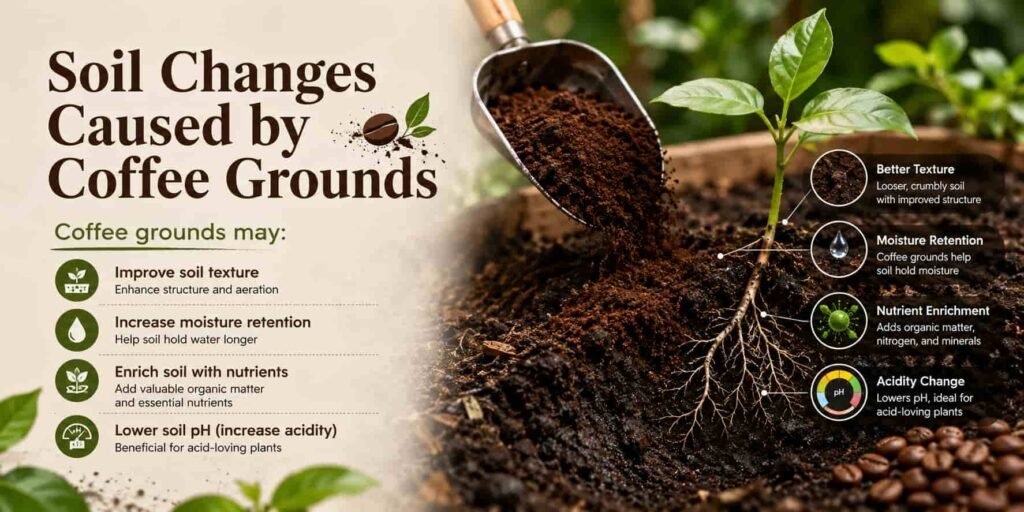
These changes are not suitable for every plant type, especially those that prefer neutral or alkaline soil.
Plants That Do Not Prefer Coffee Grounds
Some plants may grow poorly if coffee grounds are added too often because of changes in soil pH level and nutrient structure. These include:
- Lavender
- Rosemary
- Sage
- Asparagus
- Geraniums
These plants prefer more balanced or alkaline soil conditions and may show weak growth if the soil becomes too acidic.
Smart Gardening Use
Before adding coffee grounds, it is important to understand each plant’s soil requirement. A simple context-based approach helps decide whether coffee grounds are helpful or harmful for a specific plant.
Read Also: Coffee Tourism: Explore Global Cultures [Ultimate Guide]Coffee Grounds and Plant Growth Benefits
Coffee grounds can support healthier gardens when used correctly. They contain important nutrients such as nitrogen, phosphorus, and potassium, which help improve plant growth and overall plant health. These elements work as a natural soil amendment that can improve soil quality over time.
Soil Acidity and Plant Suitability
Used coffee grounds are slightly acidic. This makes them useful for plants that prefer acidic conditions, such as rhododendrons, azaleas, and blueberries. They can help maintain a balanced soil pH for these types of plants.
However, not all plants respond well to acidity. Plants like lavender, asparagus ferns, and geraniums prefer neutral or alkaline soil. For them, coffee grounds may disturb soil pH balance and affect healthy growth.
Safe Use in Gardening
Fresh coffee grounds can be too strong for young plants and may harm seedlings during early germination stages. To reduce this risk, it is better to use coffee grounds after composting process. Composting helps break them down and makes nutrients safer and easier for plants to absorb.
Smart Gardening Practice
Understanding your plant’s needs is important before adding coffee grounds to soil. Proper use improves soil quality, supports sustainable gardening, and boosts overall plant performance without causing damage.
In short, coffee grounds are useful, but only when matched carefully with the right plants and prepared correctly.
Acid-Loving Plants That Benefit from Coffee Grounds
Some plants grow better when coffee grounds are added to the soil because they improve nutrient content and support healthy soil conditions. These plants usually prefer slightly acidic environments, known as acidic soil pH.
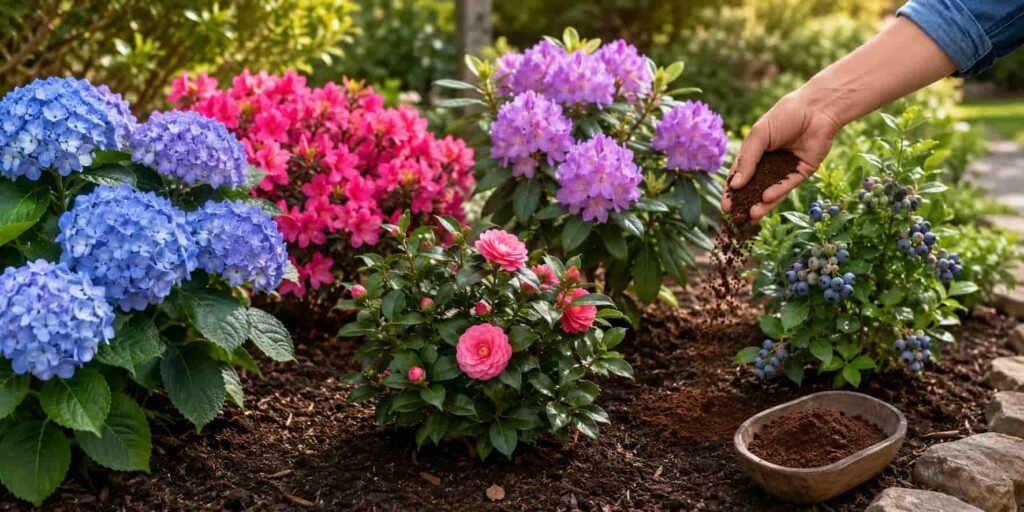
Examples of plants that can benefit include rhododendrons, azaleas, and blueberries. These plants respond well to improved soil fertility, especially when coffee grounds are used as a natural organic fertilizer or added through composting.
How Coffee Grounds Support Plant Growth
Coffee grounds help improve plant nutrition by slowly releasing key nutrients such as nitrogen. This supports stronger root development, better leaf growth, and overall healthier plants.
They also enhance soil structure, helping the soil hold moisture while still allowing proper drainage.
Simple Gardening Tip
For best results, use coffee grounds in compost first. This ensures safer nutrient release and reduces the risk of affecting sensitive plants or disturbing soil balance.
In short, coffee grounds work best for plants that enjoy acidic conditions and benefit from natural, slow-release nutrients.
Acidic Soil–Friendly Crops and Ornamentals
Some plants respond positively to coffee grounds because they improve soil fertility, adjust soil pH, and provide slow-release nutrients that support healthy plant growth.
Tomatoes and Soil Nutrition Boost
Tomatoes grow well in slightly acidic conditions. Coffee grounds can be added before planting or lightly spread around established plants (avoiding direct contact with the stem). This improves nutrient availability, enhances soil structure, and supports better fruit development.
Peppers and Growth Enhancement
Peppers benefit in a similar way to tomatoes. Coffee grounds supply essential nitrogen and help maintain mild soil acidity, which supports stronger root growth, improved plant vigor, and higher yield.
Hydrangeas and Flower Color Control
Hydrangeas are sensitive to soil pH balance, which directly affects flower color. Coffee grounds can help maintain acidic conditions, supporting vibrant blooms. However, they should be used in limited amounts to prevent excessive acidity that may harm plant health.
Roses and Natural Mulching
Roses do not require acidic soil, but coffee grounds still offer benefits. When used as a natural organic mulch, they help retain soil moisture, reduce weed growth, and improve overall soil quality around the plant base.
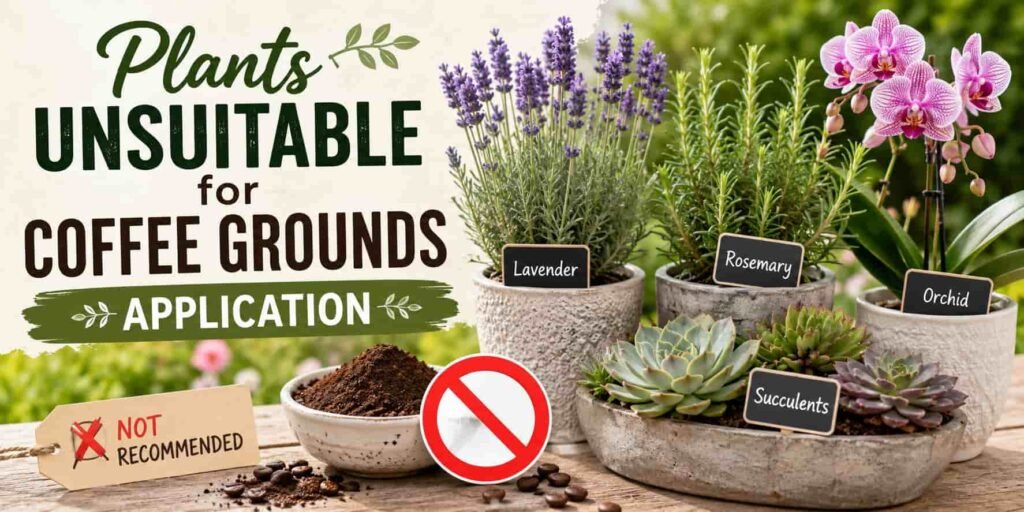
Plants Unsuitable for Coffee Grounds Application
Not all plants respond well to coffee grounds because of changes in soil pH, acidity levels, and overall soil balance. In some cases, coffee grounds may disrupt healthy plant growth and reduce soil compatibility.
Asparagus Ferns and Alkaline Soil Needs
Asparagus ferns prefer alkaline soil conditions. The acidic nature of coffee grounds can disturb the required soil environment, leading to weaker growth and poor plant development.
Geraniums and Soil Sensitivity
Geraniums also grow best in alkaline soil. Adding coffee grounds may negatively affect their nutrient uptake, reduce flowering, and harm overall plant health due to increased soil acidity.
Italian Ryegrass and Neutral Soil Preference
Italian ryegrass performs best in neutral to slightly alkaline soil. Excess acidity from coffee grounds can impact soil structure, slow growth, and reduce its overall agricultural performance.
Chinese Mustard and Balanced Soil Requirements
Chinese mustard prefers neutral soil conditions. Coffee grounds may disrupt soil pH balance, affecting germination, growth rate, and general plant vitality.
Important Gardening Note
Before using coffee grounds, always check the plant’s soil pH preference and nutrient requirements. If the plant is sensitive or its needs are unclear, it is safer to avoid coffee grounds to protect long-term soil health and plant sustainability.
Read Also: Is Core Water Good For You? [Expert Facts]Safe Use of Coffee Grounds in Gardening
Using coffee grounds correctly can improve soil quality, support plant nutrition, and enhance overall plant growth. However, proper handling is important to avoid problems in soil pH balance and nutrient absorption.
Composting for Better Nutrient Release
Fresh coffee grounds are often too strong and acidic for direct use. Through the composting process, they break down slowly into a safer form of organic matter, making nutrients more available for plants and improving overall soil fertility.
Gradual Application Strategy
Start with a small amount of coffee grounds around plants. This helps you monitor how plants respond in terms of growth response, soil interaction, and overall plant health before increasing usage.
Avoiding Overuse in Soil Management
Too many coffee grounds can disturb soil pH levels and negatively affect microbial activity in the soil. Balanced use is essential to maintain healthy soil structure and long-term plant sustainability.
Proper Placement for Plant Protection
Always apply coffee grounds around the soil surface and avoid direct contact with plant stems. This prevents stem damage, reduces the risk of rot, and supports stable root zone development.
Final Thought
Coffee grounds can be a useful organic soil amendment when used with proper understanding of soil pH, nutrient balance, and plant requirements. They support plant growth, improve soil fertility, and enhance soil structure, but only for plants that tolerate or prefer slightly acidic conditions. For sensitive plants, incorrect use may disrupt microbial activity and reduce plant health. Therefore, careful selection, composting, and limited application are essential for safe gardening. In simple terms, coffee grounds are helpful only when matched correctly with the right plants and used in a balanced way to maintain long-term soil sustainability.
FAQ’s: Never Use Coffee Grounds for These Plants [Pro Tips]
What are coffee grounds?
Coffee grounds are the small coffee particles left after brewing coffee. The term usually means used coffee residue, but it can also refer to fresh ground coffee before brewing. Used coffee grounds are often reused for composting, gardening, recycling, and reducing organic waste.
Are coffee grounds good for indoor plants?
Yes, coffee grounds can support indoor plants when used in small amounts and the right way. They may add organic matter, improve soil health, and help with plant nutrition. However, using too much can harm houseplants, block water drainage, attract mold, or disturb the soil balance.
What happens if you use too many coffee grounds on plants?
Using too many coffee grounds can harm indoor plants by making the soil too dense, wet, or unbalanced. This may cause poor drainage, mold growth, slow plant growth, and yellow leaves. Snake plants, ZZ plants, seedlings, and other drought-tolerant houseplants can suffer if coffee grounds are used too often as fertilizer.
Can coffee grounds harm plants?
Yes, coffee grounds can be bad for some plants if used too much. They can make the soil too wet, heavy, and compact, which lowers airflow around the roots. This may cause poor drainage, root rot, and weak plant growth, especially in plants that need dry or well-drained soil.
Can coffee grounds help pothos plants?
Yes, coffee grounds can help pothos in very small amounts, but they must be used carefully. Do not place wet coffee grounds directly on the potting mix, because they can hold too much moisture, reduce soil airflow, and harm root health. This also applies to peace lilies, snake plants, monstera, spider plants, philodendrons, and other indoor houseplants.