
![Is Mountain Dew Kickstart Safe [Doctor Insight]](https://caffeinecue.com/wp-content/uploads/2026/06/Is-Mountain-Dew-Kickstart-Safe-Doctor-Insight-1024x512.jpg)
For most healthy adults, drinking Mountain Dew Kickstart once in a while is unlikely to cause serious harm. However, drinking it every day may not be a healthy habit, especially because it contains sugar, caffeine, calories, and other ingredients that can affect your blood sugar, energy levels, and overall health.
Mountain Dew Kickstart: A Quick Overview
Mountain Dew Kickstart is a flavored energy drink made for people who want a quick boost, especially in the morning. It combines the taste of Mountain Dew, fruit juice, and caffeine in one can. Because of this, many people see it as a mix between a soft drink, a juice-based beverage, and an energy drink.
Each can contains about 92 mg of caffeine, which makes it stronger than many regular sodas but usually lower in caffeine than some popular energy drinks like Monster. This amount of caffeine may help improve alertness, reduce tiredness, and make you feel more awake for a short time.
From a health point of view, caffeine works as a stimulant. It can support mental focus, energy levels, and concentration, especially when someone feels sleepy or low on energy. This is why some people use Mountain Dew Kickstart as a morning drink or a quick energy boost.
However, it is also important to look at its ingredients. Some versions may contain high fructose corn syrup, added sugar, and extra calories. Drinking it often may affect your daily diet, especially if you already consume other sugary foods or drinks.
In simple words, Mountain Dew Kickstart can help with morning sluggishness and temporary fatigue, but it should not replace a healthy breakfast, water, or balanced nutrition. It is best to drink it in moderation and pay attention to your overall caffeine intake, sugar intake, and health goals.
Mountain Dew Kickstart Ingredients Explained
Mountain Dew Kickstart is a carbonated energy drink that combines the familiar Mountain Dew flavor with fruit juice, caffeine, and selected vitamins. It is made for people who want a quick energy boost, a refreshing taste, and a light fruity twist in one drink.
The drink contains several ingredients that support its taste, texture, freshness, color, and energizing effect. Here is a simple breakdown of the main ingredients found in Mountain Dew Kickstart.
Carbonated Water
Carbonated water gives Mountain Dew Kickstart its fizzy and refreshing feel. It works as the main liquid base of the drink and helps create the sharp, bubbly texture that many people expect from a soft drink or energy beverage.
High Fructose Corn Syrup
High fructose corn syrup is used as a sweetener. It gives the drink its strong sweet taste and adds to its overall calorie content. Since it is a type of added sugar, drinking it too often may increase daily sugar intake.
Concentrated Orange Juice
Concentrated orange juice adds a light fruit flavor and gives the drink a citrus-style taste. It may also provide a small amount of vitamin C, but Kickstart should still not be treated as a replacement for real fruit or a healthy breakfast.

Citric Acid
Citric acid helps balance the sweetness with a tangy flavor. It also supports the drink’s freshness and improves the overall flavor profile by giving it a sharper citrus taste.
Natural Flavors
Natural flavors are added to create the unique taste of Mountain Dew Kickstart. These flavors help improve the drink’s aroma, taste, and overall refreshing quality.
Caffeine
Caffeine is one of the main ingredients responsible for the drink’s energy-boosting effect. It acts as a stimulant, which may help improve alertness, focus, and concentration for a short time. However, too much caffeine can cause issues such as restlessness, sleep problems, or a fast heartbeat in some people.
Sodium Benzoate and Potassium Sorbate
Sodium benzoate and potassium sorbate are used as preservatives. They help keep the drink fresh by slowing the growth of unwanted microbes, which can extend the product’s shelf life.
Gum Arabic
Gum Arabic is a natural stabilizer that comes from acacia trees. It helps keep the ingredients mixed properly and supports a smooth, consistent drink texture.
Vitamins B3 and B6
Mountain Dew Kickstart contains vitamin B3 and vitamin B6, also known as niacinamide and pyridoxine hydrochloride. These B vitamins help support normal energy metabolism, which means they help the body use energy from food.
Color Additives
Color additives, such as Yellow 5, are used to give the drink its bright and attractive appearance. These ingredients improve the drink’s visual appeal, but they do not add nutritional value.
Ginseng Extract
Ginseng extract is included as an additional energy-related ingredient. It is often linked with stamina, mental focus, and physical performance, although its effects can vary from person to person.
Mountain Dew Kickstart Flavor Options
Mountain Dew Kickstart offers several flavor varieties for people who want a refreshing drink with a light energy boost. It combines the familiar taste of Mountain Dew with caffeine, fruit flavors, and other energy-supporting ingredients. Each flavor has a different taste profile, so consumers can choose one based on their mood, preference, or time of day.
Fruit Punch
Fruit Punch has a sweet and bold fruity taste. It blends different fruit-style notes into one bright flavor, making it a good choice for people who enjoy a strong and refreshing fruit-flavored energy drink.
Orange Citrus
Orange Citrus has a sharp and refreshing citrus flavor. It combines orange-style sweetness with a tangy finish, making it suitable for people who want a bright morning drink or a quick pick-me-up.
Black Cherry
Black Cherry offers a deeper and slightly tart cherry flavor. It has a richer taste compared to lighter fruit flavors, making it a good option for people who prefer a stronger and more balanced sweet-and-tangy beverage.
Limeade
Limeade has a crisp, sour, and refreshing lime flavor. Its tangy taste makes it feel lighter and cooler, especially for people who enjoy drinks with a sharp citrus kick.
Midnight Grape
Midnight Grape delivers a rich grape flavor with a cool and smooth finish. It is a suitable option for people who like dark fruit flavors and want a refreshing carbonated energy drink with a bold taste.
Mango Lime
Mango Lime combines sweet mango flavor with tangy lime notes. This mix gives the drink a tropical taste, making it a good choice for people who enjoy sweet, citrusy, and refreshing fruit-based drinks.
Pineapple Orange Mango
Pineapple Orange Mango blends three tropical-style fruit flavors: pineapple, orange, and mango. It has a sweet, bright, and bold taste that may appeal to people who enjoy exotic tropical flavors.
Healthier Alternatives to Mountain Dew Kickstart
If you like Mountain Dew Kickstart but want something with less sugar, fewer artificial ingredients, or a different flavor profile, there are several other energy drinks and caffeinated beverages to consider. These options may provide a quick energy boost while offering cleaner ingredients, lower calories, or more natural sources of caffeine.
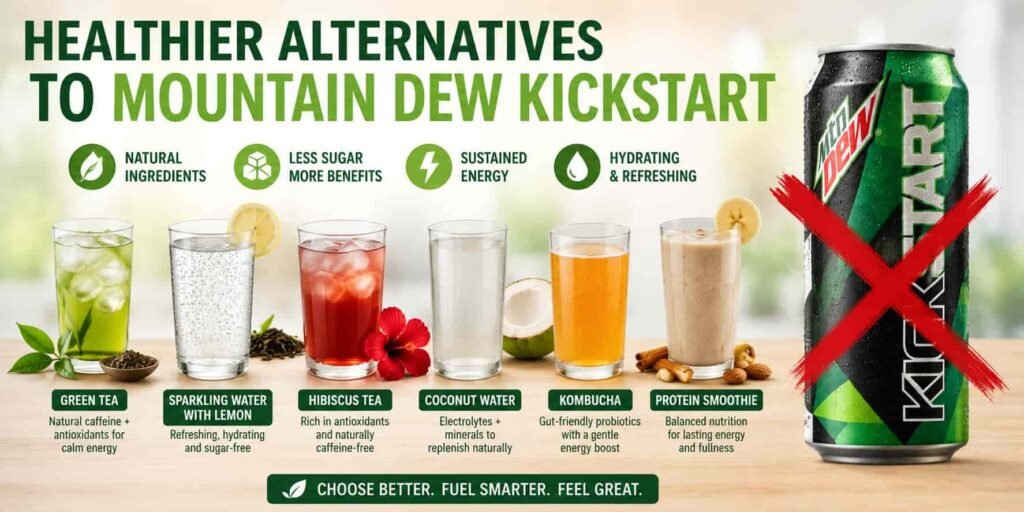
Zevia Energy
Zevia Energy is a good option for people who want a sugar-free energy drink without artificial colors. It is usually made with natural ingredients and uses caffeine from coffee extract. Since it has no sugar and no calories, it may be suitable for people who want a lighter energy beverage.
V8 +Energy
V8 +Energy is a juice-based energy drink made with fruit and vegetable juices. Its caffeine comes from green tea, which may feel smoother for some people than stronger energy drink formulas. It can be a better choice for those who want a drink with some fruit and vegetable content and less sugar than many traditional energy drinks.
RUNA Clean Energy
RUNA Clean Energy uses organic guayusa, a naturally caffeinated leaf from the Amazon. Guayusa contains natural caffeine and antioxidants, which makes this drink a cleaner option for people who prefer plant-based energy support. It is often chosen by those who want fewer synthetic additives and a smoother caffeine boost.
Hiball Energy Sparkling Water
Hiball Energy Sparkling Water is a good choice for people who do not want a sweet drink. It combines carbonated water, caffeine, ginseng, and B vitamins without added sugar or calories. This makes it a simple option for anyone looking for a clean, unsweetened energy drink alternative.
Guru Organic Energy
Guru Organic Energy is made with organic ingredients and naturally sourced caffeine from green tea and guarana. It does not usually rely on artificial colors, artificial flavors, or synthetic preservatives. This makes it appealing to people who want a more natural energy drink with a smoother taste.
Possible Side Effects of Mountain Dew Kickstart
Mountain Dew Kickstart may cause side effects in some people, mainly because it contains caffeine. Although its caffeine content is moderate compared to stronger energy drinks, everyone reacts differently. Some people have a higher caffeine tolerance, while others are more sensitive even to small amounts.
People who are sensitive to caffeinated beverages may notice symptoms such as nervousness, stomach discomfort, headaches, or trouble relaxing after drinking Mountain Dew Kickstart.
Caffeine Sensitivity and Common Reactions
Jitters and Nervousness
The stimulant effect of caffeine can make some people feel shaky, nervous, or uncomfortable. This is often called having jitters. It may happen more easily in people who do not drink coffee, energy drinks, or other caffeine-containing drinks regularly.
Anxiety or Restlessness
For some people, caffeine may increase anxiety, restlessness, or a feeling of being overly alert. This can happen when the body reacts strongly to the energy-boosting ingredients in the drink.
Digestive Discomfort
Caffeine can speed up digestion and may irritate the stomach in some people. This may lead to stomach discomfort, loose stools, or diarrhea, especially if the drink is consumed quickly or on an empty stomach.
Headaches
Caffeine affects people in different ways. For some, it may reduce a headache for a short time. For others, it may cause headaches, especially when the caffeine effect starts to wear off. Regular caffeine use may also lead to caffeine withdrawal symptoms if intake suddenly decreases.
Agitation
Drinking too much caffeine may lead to agitation, irritability, or difficulty staying calm. This is more likely if Mountain Dew Kickstart is consumed along with other caffeinated drinks during the same day.
Ringing in the Ears
Although less common, high caffeine intake may be linked to ringing in the ears, also known as tinnitus, in some people. This reaction may depend on a person’s sensitivity and total daily caffeine consumption.
Chest Pain or Heart Palpitations
In rare cases, too much caffeine may cause chest pain, a fast heartbeat, or heart palpitations. This is less likely from one can of Mountain Dew Kickstart, but the risk may increase if someone drinks multiple energy drinks or already has heart-related concerns.
Read Also: Coffee Manga: Where Cups Meet Comics [Culture Fusion]How to Drink Mountain Dew Kickstart Safely?
Mountain Dew Kickstart can be enjoyed as a flavorful energy drink, especially for people who want a quick caffeine boost with a fruity taste. It combines carbonation, fruit juice, caffeine, and different flavor options, which makes it appealing to many consumers.
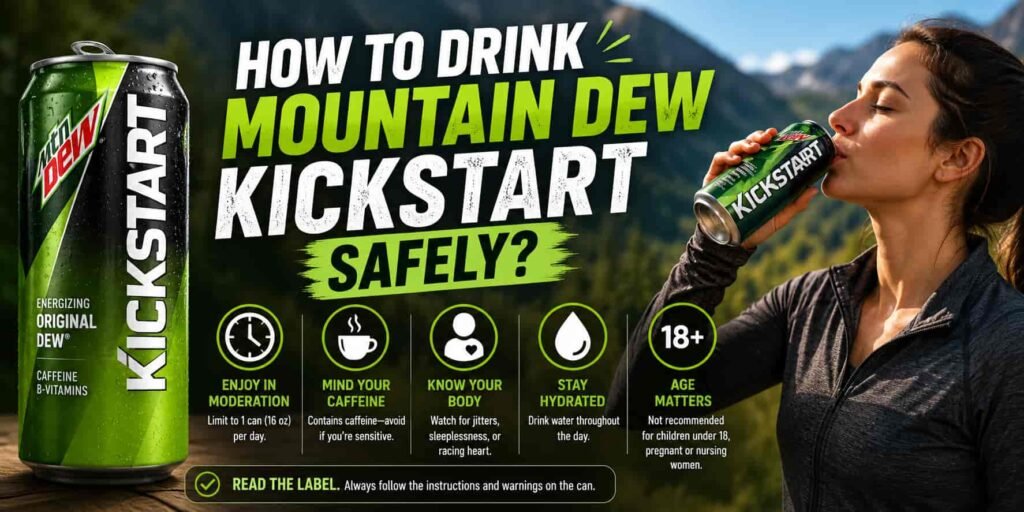
However, like other caffeinated beverages, it should be consumed in moderation. Drinking too much Mountain Dew Kickstart may increase your daily caffeine intake, sugar intake, and overall calorie consumption, especially if you also drink coffee, soda, tea, or other energy drinks during the day.
A balanced approach is important. Mountain Dew Kickstart can fit into a normal lifestyle if it is not used as a replacement for water, healthy meals, or proper rest. It may help with temporary tiredness, low energy, or morning sluggishness, but it should not become the main source of daily energy.
For better health and wellness, it is best to check the label, understand the ingredients, and pay attention to how your body reacts. People who are sensitive to caffeine should be extra careful, as they may experience jitters, restlessness, sleep problems, or digestive discomfort.
How Much Mountain Dew Kickstart Should You Drink Daily?
Mountain Dew Kickstart can be a refreshing energy drink for people who want a quick caffeine boost and a fruity taste. However, it should be consumed in moderation, especially because it contains added sugar, caffeine, and calories.
The American Heart Association recommends limiting daily added sugar intake to about 36 grams for men and 25 grams for women. Since one 16-ounce can of Mountain Dew Kickstart may contain around 20 grams of sugar, drinking more than one can can quickly raise your total sugar consumption for the day.
For most people, it is better to limit Mountain Dew Kickstart to one can or less per day. This can help reduce the risk of consuming too much added sugar while still allowing you to enjoy its energy-boosting effect, flavor, and refreshing taste.
It is also important to consider your total daily caffeine intake from other sources, such as coffee, tea, soda, and other energy drinks. Drinking too much caffeine may lead to jitters, restlessness, sleep problems, or digestive discomfort, especially in people who are sensitive to caffeine.
What Experts Say About Energy Drinks
Energy drinks, including Mountain Dew Kickstart, have been studied by health researchers because they can affect the body in both helpful and harmful ways. These drinks are often used for a quick energy boost, mainly because they contain caffeine and other energy-supporting ingredients.
Scientific research shows that caffeine can temporarily improve alertness, focus, mental performance, and reaction time. This is why some people drink caffeinated beverages when they feel tired, sleepy, or low on energy.
However, experts also warn that energy drinks should be consumed in moderation. Too much caffeine intake may lead to unwanted side effects, such as a faster heart rate, anxiety, jitters, restlessness, and sleep problems. These effects may be stronger in people who are sensitive to caffeine or who already consume coffee, soda, tea, or other energy drinks.
The main point from expert opinions and health studies is that Mountain Dew Kickstart may provide short-term energy support, but it should not be used as a daily replacement for proper sleep, water, or a balanced diet. Drinking it occasionally may be fine for many people, but regular or excessive use may affect overall health, sleep quality, caffeine tolerance, and wellness.
What Health Experts Say About Mountain Dew Kickstart
Health professionals often advise people to be careful with Mountain Dew Kickstart because it contains added sugar, caffeine, and other energy drink ingredients. While it may provide a short-term energy boost, regular or excessive consumption can affect overall health and wellness.
One main concern is the drink’s sugar content. Too much added sugar in the diet may contribute to weight gain, tooth decay, blood sugar problems, and a higher risk of type 2 diabetes and heart disease over time. This is why experts usually recommend limiting sugary beverages, including soft drinks, energy drinks, and other caffeinated drinks.
Health experts also point out that Mountain Dew Kickstart should not replace water, healthy meals, proper sleep, or a balanced diet. It may be useful occasionally when someone wants a quick pick-me-up, but it should not become a daily habit or the main source of energy.
A Balanced View of Mountain Dew Kickstart and Health
Mountain Dew Kickstart can be used as an occasional energy drink when someone wants a quick caffeine boost or a short-term pick-me-up. However, it should not be seen as a replacement for a balanced diet, healthy lifestyle, proper hydration, or enough sleep.
Like many caffeinated beverages, Kickstart may help improve alertness, focus, and energy levels for a limited time. Still, depending on it too often for daily energy may not support long-term health and wellness. This is mainly because it may contain caffeine, added sugar, calories, and other energy drink ingredients that can affect the body when consumed regularly or in large amounts.
People who are sensitive to caffeine or who have health concerns should be more careful. Regular intake may increase the risk of jitters, sleep problems, restlessness, blood sugar issues, or other caffeine-related side effects. For this reason, anyone planning to drink Mountain Dew Kickstart often should consider speaking with a healthcare provider or registered dietitian for advice based on their personal health condition, dietary needs, and nutrition goals.
Read Also: Coffee Etiquette Guide: Sip Like a Pro [Must-Know]Final Thoughts
Mountain Dew Kickstart is a flavored energy drink that combines caffeine, fruit juice, carbonation, and added vitamins for a quick energy boost.It may help improve alertness, focus, and reduce temporary tiredness, especially in the morning.However, it contains added sugar, calories, and other energy drink ingredients that should be consumed carefully.Drinking it too often may increase the risk of jitters, sleep problems, digestive discomfort, weight gain, and blood sugar issues.Health experts suggest using it only in moderation and not as a replacement for water, healthy meals, or proper sleep.Overall, Mountain Dew Kickstart can be enjoyed occasionally, but a balanced diet and healthy lifestyle are better for long-term energy.
FAQ’s: Is Mountain Dew Kickstart Safe? [Doctor Insight]
How much Mountain Dew Kickstart should you drink in a week?
Mountain Dew Kickstart is a caffeinated energy drink, so it should not be used as part of your daily diet. Drink it only when you need an energy boost, and limit yourself to one can at a time. For regular use, around 2 to 3 cans per week is a better limit, with gaps between days to avoid too much caffeine, sugar, and calorie intake.
What happens if you drink too much Mountain Dew Kickstart?
Drinking too much Mountain Dew Kickstar can cause several health problems because it contains caffeine, sugar, and other energy drink ingredients. Too much intake may lead to a fast heart rate, high blood pressure, sleep problems, nervousness, jitteriness, nausea, stomach cramps, or diarrhea.
Can a 13-year-old drink Mountain Dew Kickstart?
A 13-year-old should avoid Mountain Dew Kickstart because it is a caffeinated energy drink. Its caffeine content may affect a teenager’s heart rate, sleep, focus, and overall health. Health experts, including the American Academy of Pediatrics, generally advise that children and teenagers should not consume energy drinks.
What is Mountain Dew Kickstart Energy Drink?
Mountain Dew Kickstart is a caffeinated energy drink made by PepsiCo. It was launched in February 2013 as a morning beverage for people who wanted a different option from regular soda. It combines the Mountain Dew flavor with caffeine, juice flavor, and an energy-boosting drink style.