
![Amino Acid Supplements Benefits & Risks [Must Know]](https://caffeinecue.com/wp-content/uploads/2026/06/Amino-Acid-Supplements-Benefits-Risks-Must-Know-1024x512.jpg)
Is Amino Energy a Healthy Choice?
Amino Energy may be useful for people who need a quick energy boost and support for muscle recovery. It can fit into an active lifestyle when used correctly and in the right amount.
However, it is important to check your caffeine sensitivity, daily caffeine intake, and the presence of artificial ingredients. Using it too often or in high amounts may not be suitable for everyone.
Overall, Amino Energy can be good for you when taken in moderation and matched with your personal health goals, fitness routine, and diet.
What Are Amino Acids?
Amino acids are the basic building blocks of protein. The body uses them to make proteins, repair muscles, support growth, and maintain many important body functions.
They are natural organic compounds made from elements such as carbon, hydrogen, oxygen, and nitrogen. These nutrients play an important role in protein synthesis, which is the process your body uses to build and repair tissues.
Main Types of Amino Acids
Amino acids are usually divided into three main groups:
- Essential amino acids
- Conditionally essential amino acids
- Nonessential amino acids
Essential amino acids are especially important because the body cannot make them on its own. You must get them from dietary protein and protein-rich foods such as meat, fish, eggs, dairy products, beans, lentils, nuts, and soy.
In simple words, amino acids help your body build protein, support muscle recovery, and keep your body working properly.
How Conditional and Nonessential Amino Acids Work
Conditionally essential amino acids are usually made by the body, so they are not always needed from food. However, during illness, injury, stress, or intense physical activity, the body may need extra support and may not produce enough of them.
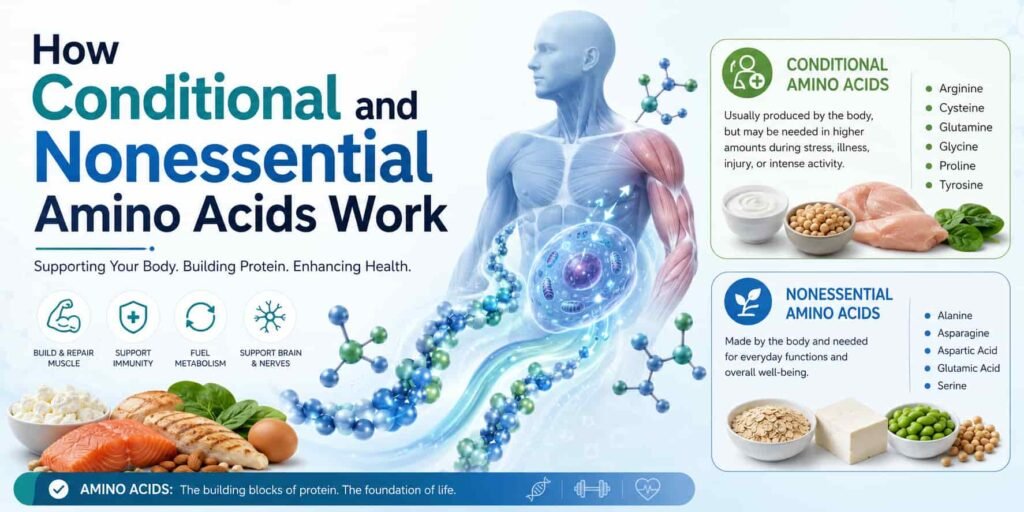
Nonessential amino acids are different because the body can make them on its own, even if they are not directly supplied through the diet. They still play an important role in protein synthesis, muscle repair, cell function, and overall health.
Why Amino Acids Are Important for the Body
Amino acids help the body perform many important biological functions. They support digestion, improve nutrient absorption, repair body tissues, and help with muscle growth and muscle recovery.
They can also be used as an energy source when the body needs extra fuel. Amino acids help produce important hormones, including epinephrine, norepinephrine, thyroid hormones, and growth hormones.
They also support the brain and nervous system by helping make key neurotransmitters such as dopamine and serotonin. These chemicals play a role in mood, focus, sleep, and overall mental function.
There are 20 amino acids in total. The body can make 11 nonessential amino acids on its own, but the other 9 essential amino acids must come from a healthy protein-rich diet.
Read Also: Clear American Water Review [Health Check]What Are Amino Acid Supplements?
Amino acid supplements are products made to provide important essential amino acids that the body cannot make on its own. These nutrients help support protein synthesis, muscle recovery, energy production, and overall body function.
The nine essential amino acids include:
- Lysine
- Leucine
- Tryptophan
- Histidine
- Isoleucine
- Methionine
- Phenylalanine
- Threonine
- Valine
Common Forms and Uses
Some amino acid supplements contain all nine essential amino acids, while others focus on specific types. For example, branched-chain amino acids, also called BCAAs, include leucine, isoleucine, and valine. These are commonly used by people who want to support muscle growth, exercise performance, and post-workout recovery.
Arginine is important for children, but it is not usually listed as an essential amino acid for adults because the adult body can often produce enough of it.
There are also special hypoallergenic infant formulas, known as elemental formulas, made for babies with certain medical needs or serious protein allergies. These formulas contain amino acids along with other important nutrients.
Most amino acid supplements are available as tablets, capsules, or powders. Some powders can be mixed with water to make an energy-supporting drink.
When Do You Need Amino Acid Supplements?
Most people do not need amino acid supplements if they eat a balanced diet. Foods such as meat, fish, eggs, dairy products, vegetables, grains, beans, and lentils usually provide enough protein and essential amino acids for normal health, muscle repair, and daily body functions.
However, some people may need extra amino acids in special situations. For example, during cancer treatment, serious illness, injury, poor appetite, or high levels of physical stress, a doctor may suggest supplementation to support recovery, nutrient intake, and overall well-being.
In simple terms, amino acid supplements are usually helpful only when the body needs more support than food alone can provide.
Benefits and Safety of Amino Acid Supplements
Amino acid supplements may support health in several ways, especially for people who need extra help with muscle recovery, exercise performance, or nutrient intake. However, they are still dietary supplements, so they should be used carefully and only when they match your health needs.
Before using them, it is best to speak with a healthcare provider, especially if you have a medical condition or take regular medications.
Possible Health Benefits
Amino acids play an important role in protein synthesis, muscle growth, and tissue repair. They may help maintain muscle strength and reduce muscle breakdown, especially during exercise, illness, or recovery.
For active people, essential amino acids and BCAAs may support sports performance, post-workout recovery, and lean muscle development when taken around workout times.
Some amino acids may also help support blood sugar control, which can be important for people with type 2 diabetes. They may also help improve skin hydration, skin texture, and overall skin health.
Possible Side Effects and Risks
Although amino acid supplements can be useful, taking too much may cause unwanted side effects, such as:
- Nausea
- Vomiting
- Bloating
- Stomach cramps
- Diarrhea
- Dehydration
- Headaches
- Body pain
These supplements may also affect blood sugar levels, so people with diabetes should be careful. They may not be safe before or after surgery, unless a doctor approves them.
Supplements that contain only one single amino acid may carry a higher risk of imbalance or side effects. Examples include methionine, cysteine, and histidine.
Important Safety Tips
Amino acid supplements may interact with some diabetes medications, thyroid medications, and other treatments. Because of this, medical advice is important before starting any new supplement routine.
Also, dietary supplements are not regulated as strictly as prescription medicines. To reduce risk, choose products from reputable brands, check the ingredient label, avoid unnecessary additives, and follow the recommended dosage.
In simple words, amino acid supplements may be helpful for some people, but they are not needed by everyone. A balanced diet, safe use, and professional guidance are the best ways to protect your health.
How Amino Energy Supports Amino Acid Intake
Amino Energy is a dietary supplement made to provide a quick and convenient way to get essential amino acids. These nutrients help support muscle growth, exercise performance, protein synthesis, and post-workout recovery.
It is commonly available as powder or ready-to-drink beverages, making it easy to use before exercise, after workouts, or as part of a daily fitness routine.
Although Amino Energy may support energy levels, muscle repair, and overall well-being, it may also come with possible side effects or health risks, especially if used too often or in high amounts.
Before adding it to your diet or supplement routine, it is best to speak with a healthcare professional, especially if you have a medical condition, take medications, or are sensitive to caffeine.
In simple words, Amino Energy can be a useful option for getting amino acids conveniently, but it should be used carefully, in moderation, and with proper health guidance.
How Caffeine Affects Amino Energy
Caffeine is one of the main active ingredients in Amino Energy. It works as a natural stimulant, helping increase alertness, reduce tiredness, and improve mental focus.
The amount of caffeine may change depending on the flavor, serving size, and product type. In many cases, one serving may contain around 100 to 200 mg of caffeine.
When used in a safe amount, caffeine may support energy levels, workout endurance, exercise performance, and physical activity. This is why many people use Amino Energy before training or during a busy day.
However, too much caffeine intake can cause unwanted side effects, such as jitters, anxiety, restlessness, a fast heartbeat, and poor sleep quality. People who are sensitive to caffeine should use Amino Energy carefully and avoid taking it close to bedtime.
In simple terms, caffeine in Amino Energy may help you feel more awake and active, but it should be used in moderation to avoid negative effects.
Amin.O. Energy Drink Ingredients and Nutrition
Amin.O. Energy Drink is a low-calorie, sugar-free energy drink designed to support energy, hydration, muscle recovery, and endurance. One 12 fl. oz can contains only 5 calories, making it a light option for people who want an energy boost without extra sugar or high calories.
Each can provides 100 mg of caffeine, which may help improve alertness, mental focus, and physical performance. It also contains 5 g of amino acids, which may support muscle repair, exercise recovery, and workout endurance.
The drink has 0 g total fat, 0 g saturated fat, 1 g carbohydrate, 0 g sugar, and 0 g protein. It also includes 100 mg of salt, which adds to its electrolyte content.
Other Key Ingredients
The base of Amin.O. Energy Drink is carbonated water. It also contains natural flavors and artificial flavors for taste.
Ingredients such as citric acid, malic acid, and tartaric acid help create a sharp, fruity flavor. Sodium citrate helps balance acidity, while potassium sorbate and potassium benzoate are used as preservatives to keep the drink fresh.
For sweetness, the drink uses sucralose and, in some flavors such as grape, acesulfame potassium. These are zero-sugar sweeteners that add sweetness without increasing sugar content.
It also contains potassium chloride and magnesium phosphate, which contribute to its electrolyte profile and may help support hydration during daily activity or workouts.
In simple words, Amin.O. Energy Drink is a low-calorie, sugar-free, caffeinated beverage with amino acids and electrolytes, mainly used for energy support, focus, and workout recovery.
Read Also: Is VOSS Water Really Healthy? [Truth Revealed]Amino Energy Flavors and Taste Options
Amino Energy comes in several flavor options, making it easier for different users to choose a taste that fits their preference. These flavors usually range from sweet and fruity to tangy, citrus, and refreshing.
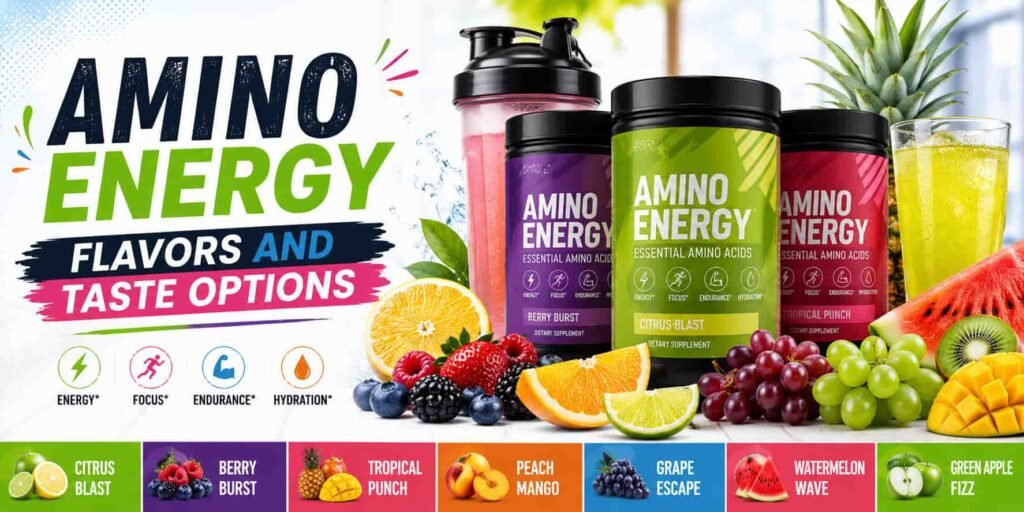
Blue Raspberry has a bold sweet and tangy flavor with a bright berry-like taste.
Watermelon gives a light, juicy, and slightly tangy taste that feels fresh and summer-like.
Grape offers a rich fruit flavor with a mix of sweetness and mild tartness, similar to grape juice or grape candy.
Green Apple has a crisp and sharp taste, combining sweetness with a fresh acidic bite.
Fruit Fusion blends different tropical fruits and citrus notes for a bright and energetic taste.
Orange Cooler provides a smooth citrus flavor with a sweet orange taste that feels refreshing.
Lemon Lime combines lemon and lime for a zesty, tangy, and slightly sour flavor.
Peach Lemonade mixes sweet peach with tart lemonade, creating a balanced and refreshing drink taste.
Pineapple has a tropical, juicy, and naturally sweet flavor inspired by ripe pineapple.
Strawberry Lime combines sweet strawberry with a sharp lime finish, giving a mix of berry sweetness and citrus freshness.
Overall, Amino Energy flavors are designed for people who want a low-calorie energy drink, amino acid supplement, or workout drink with a refreshing taste, caffeine support, and easy daily use.
How Amino Acids Support Immune Health
Amino acids may play an important role in supporting the immune system and helping the body defend itself against infections. Research suggests that specific amino acids, such as glutamine and arginine, can affect how well immune cells work.
Glutamine helps support white blood cells, which are needed to fight harmful bacteria, viruses, and other infections. Arginine may help improve the activity of macrophages, a type of immune cell that helps capture, break down, and remove harmful germs from the body.
In simple words, glutamine and arginine may support immune cell function, infection defense, and overall immune health, especially when the body is under stress or recovering from illness.
A Balanced Approach to Immune Support
These findings show that amino acids can help support overall health and immune function. However, they should not be used as the only way to protect the body from illness, infection, or weak immunity.
A strong immune system depends on several healthy habits, including a balanced diet, regular exercise, enough sleep, proper hydration, and good stress management.
In simple words, amino acids may support immune health, but the best results come from a complete healthy lifestyle and consistent daily care.
Final Thought
Amino acid supplements and Amino Energy may support muscle recovery, energy levels, workout performance, and overall well-being when used correctly. They can be helpful for active people or those who need extra amino acid intake, but they are not necessary for everyone. A balanced diet with enough protein-rich foods should always be the first source of essential amino acids. Since Amino Energy also contains caffeine, it should be used in moderation, especially by people with caffeine sensitivity. For the safest results, choose quality products, follow the recommended serving size, and speak with a healthcare professional before regular use.
FAQ’s: Amino Acid Supplements: Benefits & Risks [Must Know]
Are Amino Acids Essential for the Body?
Yes, some amino acids are essential because the body cannot make them on its own. They must come from protein-rich foods such as meat, fish, eggs, soybeans, and dairy products. Amino acids help support muscle growth, energy production, mood balance, athletic performance, and overall health. They are usually grouped as essential, nonessential, or conditionally essential amino acids.
Are Amino Acid Supplements Safe for You?
Amino acid supplements are not always bad, but they should be used carefully. Taking a single amino acid in high amounts may cause side effects, especially with methionine, cysteine, or histidine. These supplements may also interact with diabetes medication, thyroid medicine, or other prescription drugs. It is safer to get amino acids from protein-rich foods unless a doctor recommends supplements.
Can You Take Too Many Amino Acids?
Yes, taking too many amino acids can be harmful, especially when used in high amounts for a long time. The body can process amino acid supplements, but excess intake may put pressure on the liver and kidneys, affect blood sugar levels, raise ammonia levels, and cause digestive problems such as nausea, bloating, or stomach discomfort.
Are Amino Acids Safe to Use?
Amino acids are generally safe when taken in normal amounts from protein-rich foods, but amino acid supplements are not completely risk-free. High doses may affect neurotransmitters, blood pressure, ammonia levels, and organs such as the liver and kidneys. Some people may also experience side effects like nausea, headache, or stomach discomfort, especially when supplements are used without medical advice.
What Are the Side Effects of Long-Term Amino Acid Supplements?
Long-term use of amino acid supplements may cause side effects if taken in high amounts. Possible risks include changes in blood sugar levels, digestive discomfort, nausea, headaches, and extra stress on the liver and kidneys. Because some supplements may affect blood glucose control, they are usually avoided before and after surgery unless approved by a doctor.