
![Best Beans for Italian Espresso [2024 Buyer Guide]](https://caffeinecue.com/wp-content/uploads/2026/06/Best-Beans-for-Italian-Espresso-2024-Buyer-Guide-1024x512.jpg)
How to Choose the Best Beans for Italian Espresso in 2024
Making a rich and flavorful cup of Italian espresso starts with choosing the right coffee beans. The taste, aroma, and crema depend on important factors such as bean origin, roast level, coffee freshness, and overall bean quality.
To prepare espresso in the traditional Italian style, you need beans that create a strong body, smooth flavor, balanced bitterness, and a thick golden crema. This guide will help you understand how to choose the best espresso beans, including the role of Arabica beans, Robusta beans, dark roast coffee, flavor profile, and espresso preparation.
By knowing what makes high-quality beans suitable for Italian-style espresso, you can make better coffee at home and enjoy a more authentic espresso experience in 2024.
What Makes Beans Suitable for Italian Espresso?
Italian espresso is a strong and concentrated coffee drink made by forcing hot water through finely ground coffee beans. To get the right taste, the beans must be ground very fine and brewed with the correct espresso extraction method.
For traditional Italian-style espresso, the beans are usually roasted from medium roast to dark roast. This roast level helps create a bold flavor profile, lower acidity, and a smoother, fuller body.
A good espresso bean should also support a thick golden crema, which is the creamy layer on top of a fresh espresso shot. The right balance of roast level, bean freshness, grind size, coffee aroma, and brewing technique helps produce a rich, smooth, and authentic Italian espresso experience.
Arabica and Robusta in Espresso Blends
The best espresso beans often come from a careful mix of Arabica beans and Robusta beans. Arabica coffee is known for its smooth, sweet, and pleasant taste, while Robusta coffee gives a stronger flavor, heavier body, and slightly nutty finish.
For traditional Italian espresso, many roasters blend both types of beans. Arabica adds balance, aroma, and smoothness, while Robusta helps create a thicker crema, deeper coffee flavor, and stronger espresso body.
A good espresso blend should have the right balance of taste, aroma, crema quality, bean type, and roast profile. This balance helps produce a rich, bold, and satisfying Italian-style espresso.
How to Choose the Right Beans for Italian Espresso
Choosing the best coffee beans for Italian espresso depends on the grind size, roast level, bean origin, and the type of flavor you enjoy. A fine espresso grind usually creates a stronger, richer taste, while a coarser grind works better for brewing methods like a caffetiere.

For a classic Italian-style espresso, look for beans that produce deep and smooth flavor notes such as chocolate, caramel, walnut, hazelnut, dark cocoa, or molasses. These flavors help create a bold cup with good body, pleasant aroma, and a satisfying espresso crema.
Different espresso beans can give different results. Napoli beans are a good choice if you prefer a smoky, intense, and full-bodied espresso. Milano beans are better for a sweeter cup with smooth notes of chocolate and hazelnut. Roma beans suit people who enjoy deeper flavors like dark caramel and walnut.
Before buying, think about your personal taste. Choose a bold and smoky Italian coffee blend if you like strong espresso, or pick a sweeter and smoother blend if you prefer a softer flavor. The right coffee roast, grinding method, and brewing technique can help you enjoy a more authentic Italian espresso experience at home.
Read Also: Amino Acid Supplements: Benefits & Risks [Must Know]Best Tools for Making Italian-Style Espresso
For the best Italian espresso, it is better to grind your coffee beans just before brewing. Freshly ground coffee keeps more aroma, flavor, and natural oils, which helps create a richer espresso shot.
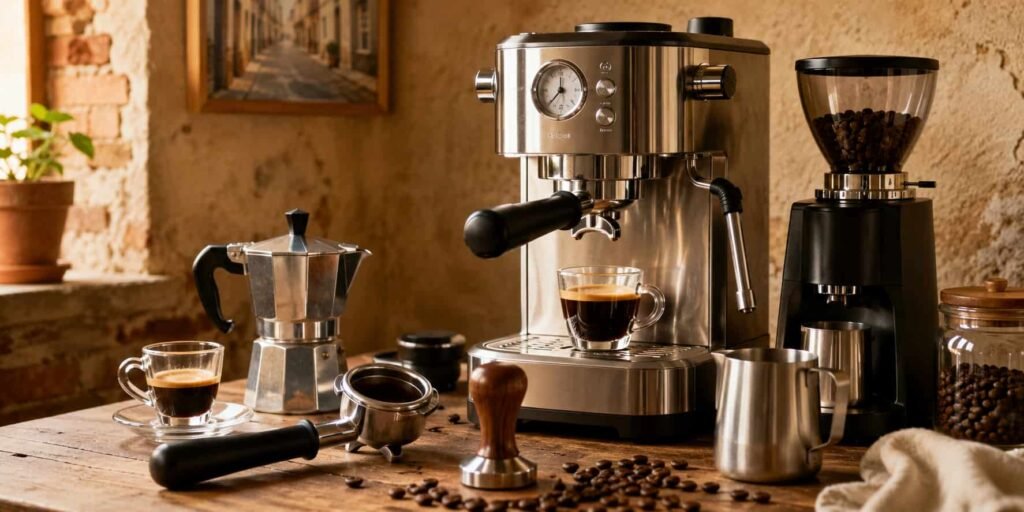
An espresso machine is the most common choice for making authentic Italian-style espresso. It uses high-pressure extraction to push hot water through finely ground coffee, producing a strong taste, full body, and thick crema.
A Moka pot is another popular option. It does not work exactly like an espresso machine, but it can still make a bold, rich, and flavorful coffee that feels close to traditional Italian espresso.
Milano Beans for Espresso and Cafetiere
Milano coffee beans are a good choice for people who enjoy a smooth and slightly sweet espresso blend. When finely ground for an espresso machine, they can produce rich flavor notes such as chocolate, caramel, and hazelnut.
For a softer taste, Milano beans can also be used with a coarser grind size in a cafetiere. This method can bring out lighter notes of honey, toffee, and nuts.
Choosing the right brewing method, coffee grind, and bean variety helps you create a better Italian coffee experience at home. For more guidance, you can also read a detailed guide on how to drink espresso the Italian way.
Authentic Italian Coffee Blends for Home Brewing
Carluccio’s offers a carefully selected range of Italian coffee blends made to reflect the rich taste and tradition of Italian espresso. Each blend is designed to bring the warm aroma, smooth body, and bold flavor of an Italian coffee house into your home.
Our coffee focuses on authentic Italian quality, using high-quality coffee beans, balanced roast profiles, and careful roasting techniques. These elements help create a rich and enjoyable coffee experience with notes that suit different taste preferences.
Whether you enjoy a strong espresso shot, a smooth Italian-style coffee, or a full-bodied coffee blend, choosing the right beans can help you enjoy the true character of Italian coffee culture at home.
Read Also: Xyience Energy Drink Review [Good or Bad?]Final Thought
Choosing the best beans for Italian espresso depends on your preferred taste, roast level, and brewing method.Arabica beans can add smoothness and aroma, while Robusta beans can improve crema, strength, and body.For a traditional Italian-style espresso, medium-dark to dark roast beans usually work best.Freshly ground coffee, the right grind size, and proper extraction also play an important role in the final cup.Whether you prefer Napoli, Milano, or Roma-style beans, the best choice is the one that matches your flavor preference.With the right beans and brewing technique, you can enjoy a rich and authentic Italian espresso experience at home.
FAQ’s: Best Beans for Italian Espresso [2024 Buyer Guide]
What are the best espresso beans?
The Lavazza Espresso Italiano Whole Coffee Beans are beans that you have to try out no matter what, while the Illy Intenso Dark Roast Italian Espresso Whole Coffee Beans are also great if you are trying to save a few bucks.
How do you choose the best coffee beans for Italian espresso?
To make a rich Italian espresso, choose fresh dark-roasted coffee beans with a smooth aroma, strong flavor, and balanced crema. The beans should be dark roasted but not oily, because oily beans can taste burnt and may harm your espresso machine. For the best result, use high-quality Arabica or an Arabica-Robusta blend.
What is the best Italian espresso?
The Lavazza Gran Espresso is a strong choice for classic Italian espresso. It has a dark roast, rich chocolate flavor, smooth aroma, and thick crema. Made with coffee beans from Brazil, Uganda, and Honduras, it gives a balanced espresso shot with a slightly spicy taste and deep coffee flavor.
What is the difference between espresso beans and coffee beans?
There is no real difference between espresso beans and coffee beans. Espresso beans are simply coffee beans that are chosen and roasted for espresso brewing. They usually work better with espresso machines, high pressure, and quick extraction, giving a stronger flavor, richer aroma, and thicker crema.
Can you use Robusta beans for espresso?
Yes, Robusta beans can be used for espresso. They often create a stronger coffee flavor, thicker crema, heavier body, and slightly higher caffeine level. Many espresso blends use Robusta with Arabica beans to balance taste, aroma, and smooth extraction.