
![9 Interesting Facts About Coffee [Dark Secrets & Myths]](https://caffeinecue.com/wp-content/uploads/2026/06/9-Interesting-Facts-About-Coffee-Dark-Secrets-Myths-1024x512.jpg)
The Legendary Origin of Coffee
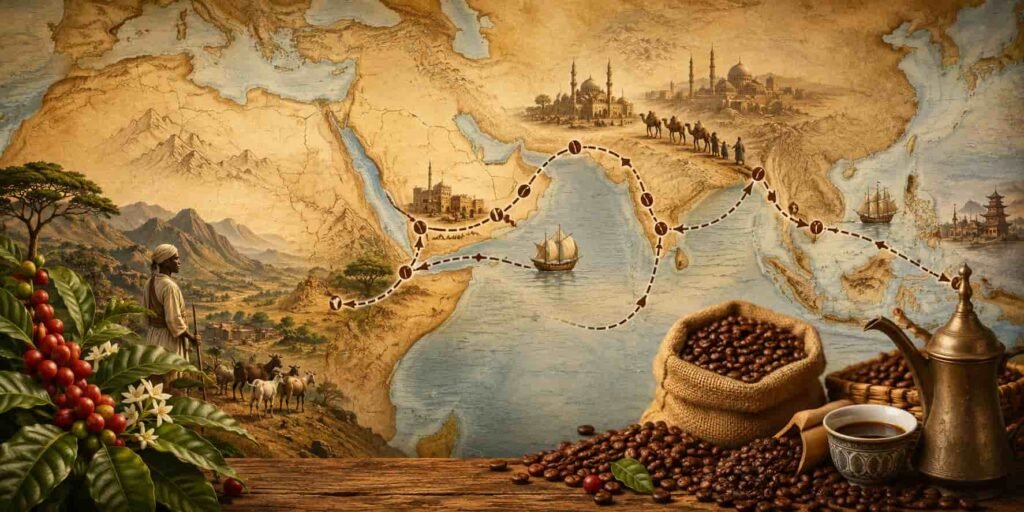
Coffee has a long and fascinating history that is often linked to ancient Ethiopia around 800 A.D. According to a popular coffee legend, goat herders noticed something unusual after their goats ate bright coffee berries. The animals became more active, energetic, and alert.
Out of curiosity, the herders tasted the berries themselves and felt a similar boost in energy. This simple moment is believed to have started coffee’s journey from a local mythical discovery to one of the most loved beverages in the world.
How Coffee Began to Spread
After noticing the effect, the herders tasted the coffee berries themselves and felt a similar boost in energy and alertness. This moment is often seen as the early beginning of coffee’s history, moving from an old Ethiopian legend to a drink that later became famous across the world.
Coffee Is More Than a Bean
Although people commonly call them coffee beans, they are actually seeds found inside bright coffee cherries. This shows that coffee comes from a natural fruit-bearing plant, connecting it closely with agriculture, farming, and the wider world of cultivated crops.
Brazil’s Leadership in Coffee Farming
Brazil is the world’s largest coffee producer and supplies almost one-third of the global coffee supply. The country is successful in coffee production because it has a suitable climate, fertile soil, and large coffee farms. These natural conditions help Brazil grow and export high-quality coffee to many countries around the world.
Coffee Culture in the Netherlands
The Netherlands is known for its strong coffee culture and high coffee consumption. On average, Dutch people consume about 8.3 kilograms of coffee per person each year. This shows that coffee is not just a daily beverage there, but also an important part of Dutch lifestyle, social habits, and cultural tradition.
Kopi Luwak: A Rare Luxury Coffee
Kopi Luwak is one of the most expensive types of coffee in the world. It comes from Indonesia and is made from coffee beans eaten and passed through the digestive system of the Asian palm civet. This unusual natural process is believed to create a smoother taste, lower bitterness, and a distinct flavor profile.
Because it is rare and difficult to produce, Kopi Luwak coffee can cost up to $600 per pound. Even though its origin is unusual, it is still valued by many coffee enthusiasts, luxury buyers, and fans of specialty coffee.
Read Also: Does Sierra Mist Have Caffeine? [2024 Truth]How Coffee Shaped Culture
Coffee has had a strong influence on global culture, social life, and daily habits. In the past, its stimulating effects made people curious, but they also caused debate. Coffee was even temporarily banned in Mecca in 1511 and in Sweden during the 18th century.
Over time, coffee became more popular and earned an important place in many societies. Today, coffee is more than a simple beverage. It supports conversation, brings people together, builds community, and connects different cultures around the world.
Top Coffee-Drinking Countries
Although Brazil is the largest coffee producer in the world, Finland is known for the highest coffee consumption per person. People in Finland drink around 27.5 pounds of coffee per year, which shows how important coffee is in their daily routine, social life, and national coffee culture.

Countries such as Sweden, Norway, and the Netherlands also have a strong love for this popular beverage. In these places, coffee is not only a drink but also a part of everyday habits, workplace breaks, family gatherings, and cultural traditions.
Coffee and Possible Health Benefits
Coffee is more than a morning drink that helps people feel awake. It contains useful nutrients, natural antioxidants, and active compounds that may support overall health when consumed in moderation. Some studies suggest that regular coffee consumption may be linked with better longevity and a lower risk of certain conditions, such as heart disease and type 2 diabetes.
So, the next time you enjoy a warm cup of coffee, remember that it is not only rich in taste and aroma. It may also offer some helpful health benefits as part of a balanced lifestyle.
Read Also: Espresso vs Coffee: More Caffeine? [Real Facts]
Coffee’s Lasting Place in History
The history of coffee shows how deeply this popular beverage has connected people across different cultures and generations. Whether someone drinks it alone in the morning or shares it with friends, every cup reflects a long tradition of social connection, comfort, and daily routine.
Coffee is not just a drink. It is part of human heritage, cultural identity, and shared experiences around the world.
Final Thought
Coffee is more than a simple drink; it is a global beverage with a rich history, strong culture, and deep social meaning. From its legendary beginning in Ethiopia to major coffee-producing countries like Brazil, coffee has become part of daily life around the world. It connects people through conversation, tradition, and shared moments. Coffee also offers unique flavors, from common brews to rare types like Kopi Luwak. When enjoyed in moderation, it may even support overall health. In every cup, coffee carries a story of energy, culture, and human connection.
FAQ’s: 9 Interesting Facts About Coffee [Dark Secrets & Myths]
Is coffee really a myth?
Coffee itself is not a myth, but many coffee myths about its effects have spread over time. Some false claims about caffeine, health risks, and coffee drinking have already been disproved, but a few caffeinated rumors still exist. That is why it is important to understand the facts about coffee instead of believing unsafe or misleading information.
Who is believed to have discovered coffee first?
According to a popular Ethiopian legend, coffee was first noticed by Kaldi, a goat herder. He saw his goats becoming unusually active after eating red coffee berries. Curious about their energy boost, Kaldi tried the berries himself, which later became part of the famous origin story of coffee.
Where did coffee originally come from?
Coffee is believed to have originated in Ethiopia. According to a famous coffee legend, a goat herder named Kaldi noticed that his goats became unusually energetic after eating red coffee berries from a wild shrub. This story is often linked to the early discovery of coffee beans and the beginning of coffee culture.
Why has coffee become so popular around the world?
Coffee is popular because it is a widely loved beverage that gives people an energy boost, improves alertness, and is part of daily social culture. Many people also value it for its possible health benefits, including support for well-being and the immune system. Over time, coffee shops became common places for conversation, work, and relaxation.
Why did coffee become important during the American Revolution?
During the American Revolution, coffee became a symbol of patriotism after many Americans rejected British tea because of the tea boycott and the Boston Tea Party. Drinking coffee showed support for independence, making it a popular patriotic beverage during the Revolutionary War.