
![Best Non-Oily Espresso Beans [2024 Guide]](https://caffeinecue.com/wp-content/uploads/2026/06/ChatGPT-Image-Jun-22-2026-06_50_33-PM-1-1024x512.jpg)
Why Coffee Imports Matter in the United States
The United States imports more than $4 billion worth of coffee every year from major coffee-producing countries such as Colombia, Kenya, and Vietnam. This shows how important coffee is in daily life, from a quick morning cup to specialty drinks like espresso.
For many coffee lovers, choosing the right espresso beans can be confusing. The flavor, aroma, crema, and brewing quality all depend on the type of beans you use. If you want a smooth and clean espresso, non-oily coffee beans are often a better choice because they can help protect your espresso machine, support better grinding consistency, and produce a balanced coffee flavor.
This guide will help you discover the best non-oily coffee beans for espresso in 2024, so you can make a rich, fresh, and enjoyable cup at home.
How to Choose Clean Espresso Beans
A great espresso experience starts with choosing the right coffee beans. For smooth taste and better machine performance, non-oily espresso beans are often the best option. They give you a rich coffee flavor, strong aroma, and balanced espresso shot without leaving too much oily residue in your cup, grinder, or espresso machine.
High-quality non-oily coffee beans should look dry on the surface, smell fresh, and produce a clean, full-bodied taste. They are usually easier to grind, safer for regular machine use, and better for consistent espresso extraction.
In this guide, you will learn how to identify the best non-oily beans for espresso, what makes them different from low-quality beans, and how to choose beans that deliver a fresh, smooth, and flavorful cup every time.
What Are Espresso Coffee Beans?
Espresso coffee beans are coffee beans roasted and prepared for making espresso, a strong and concentrated coffee drink. In the espresso brewing method, hot water is forced through finely ground coffee under high pressure. This creates a rich espresso shot with bold flavor, strong aroma, and a thick golden layer called crema.
Espresso is often used as the base for popular coffee drinks such as cappuccinos, lattes, macchiatos, and Americanos. However, many people also enjoy it as a single or double shot.
Compared to regular coffee beans, espresso beans often have a darker color, deeper taste, and sometimes a slightly shiny surface. To make smooth and high-quality espresso at home, choosing the right coffee beans, roast level, and grind size is very important.
Why Some Coffee Beans Look Oily
Some coffee beans have a shiny layer of natural oil on the surface. This happens because of the bean type, growing conditions, and roasting process. During roasting, heat pulls natural oils from inside the bean to the outside.
Robusta beans are usually stronger, more bitter, and sometimes oilier than Arabica beans. The climate also matters. Coffee grown in warmer or more humid areas may develop a different flavor profile, body, and oil level.
The roast level plays the biggest role. Dark roast coffee beans often look more oily because longer roasting brings more oil to the surface. Light roast beans usually stay drier, while medium roast coffee can offer a balanced taste with enough natural oil for flavor but not too much residue.
For regular home use, many coffee lovers prefer non-oily espresso beans or balanced medium roast espresso beans. These beans can protect your espresso machine, reduce oily buildup in the coffee grinder, and support cleaner espresso extraction.
The best choice depends on your taste, brewing style, and machine type. If you want a clean, smooth, and flavorful cup, choose fresh espresso coffee beans with a balanced roast, rich aroma, and low surface oil.
Read Also: Xyience Energy Drink Review [Good or Bad?]How Oily Beans Can Affect Your Espresso Machine
An espresso machine is a valuable investment, especially for home coffee lovers. Many machines cost several hundred dollars, so using the right espresso beans is important for protecting the machine and keeping your coffee taste fresh.
Oily coffee beans can create problems because their surface oils may build up inside the grinder, hopper, portafilter, brew unit, filters, and tubing. Over time, this oily residue can block small parts, reduce water flow, and make the machine work harder than it should.
The coffee grinder is often affected first. Oils can stick to the burrs and other grinder parts, causing old coffee particles to collect. This buildup may turn stale or rancid, which can damage the coffee flavor, reduce grind consistency, and affect the quality of your espresso extraction.
If the oil reaches the internal parts of the machine, it may clog screens, filters, and water lines. This can lower machine performance, increase maintenance needs, and shorten the life of your espresso maker.
Oily beans can also leave unwanted residue in your cup, creating a bitter, stale, or unpleasant taste. For better results, choose fresh non-oily espresso beans. They help protect your espresso machine, keep your coffee grinder cleaner, support smoother brewing, and produce a cleaner, richer espresso shot.
How to Pick the Right Non-Oily Espresso Beans
Choosing the right non-oily espresso beans helps protect both your coffee flavor and your espresso machine. Since oily coffee beans can leave residue in the grinder, portafilter, and brewing parts, it is better to use beans that are fresh, clean, and not too oily.
Many people think espresso beans must always be very dark, but this is not always true. A medium roast is often a better choice for espresso because it gives a rich taste without too much surface oil. It also allows the natural flavor profile, aroma, body, acidity, and sweetness of the coffee beans to come through clearly.
In contrast, very dark roast coffee can sometimes hide the unique tasting notes of the beans. It may create a stronger, smoky, or bitter flavor, but it can also make different beans taste too similar.
For a cleaner and more balanced espresso shot, choose medium roast espresso beans with low surface oil, fresh roasting dates, and a smooth coffee aroma. These beans support better espresso extraction, protect your equipment, and help you enjoy a more flavorful cup.
Why Medium Roast Beans Are Better for Clean Espresso
Medium roast coffee beans are a strong choice for making smooth, clean, and flavorful espresso. Unlike very dark roasts, medium roasts keep some of the bean’s natural acidity, sweetness, aroma, and unique flavor notes. This helps you enjoy the real character of premium coffee beans, including high-quality beans used for Italian espresso.
Dark roasts can sometimes create a heavy, smoky, or bitter taste. In the past, very dark roasting was also used to cover the weaker flavor of lower-quality beans. For this reason, choosing a medium roast can help you taste the true quality, origin, body, and balance of the coffee.
Medium roast beans also usually have less surface oil than dark roast beans. This makes them a better option for a non-oily espresso, because they can reduce oily buildup in the coffee grinder, portafilter, and espresso machine.
When choosing the best non-oily espresso beans, look for fresh medium roast beans with a clean surface, rich aroma, balanced acidity, and smooth espresso extraction. This will help you make a better-tasting cup while also protecting your brewing equipment.
How to Choose the Right Beans for Espresso
Choosing the best coffee beans for espresso is an important step for anyone who wants to make good espresso at home. For many new home baristas, the wrong beans can lead to weak flavor, poor espresso extraction, and disappointing results. The right beans, however, can make your espresso taste richer, smoother, and more balanced.
Are Espresso Beans Different from Regular Coffee Beans?
The term espresso coffee beans can be confusing because espresso does not require one special type of bean. In simple terms, almost any coffee bean can be used to make espresso if it is ground finely and brewed under pressure.
However, some beans work better than others. Espresso blends are often the easiest choice for beginners because they are made specifically for espresso brewing. These blends usually combine different Arabica beans, Robusta beans, origins, roast levels, and flavor profiles to create a consistent taste.
Why Espresso Blends Are Good for Beginners
Espresso blends are a reliable option for people using basic espresso machines or still learning barista skills. They are usually roasted from medium roast to dark roast, which helps create a full body, rich aroma, balanced bitterness, and a smooth crema.
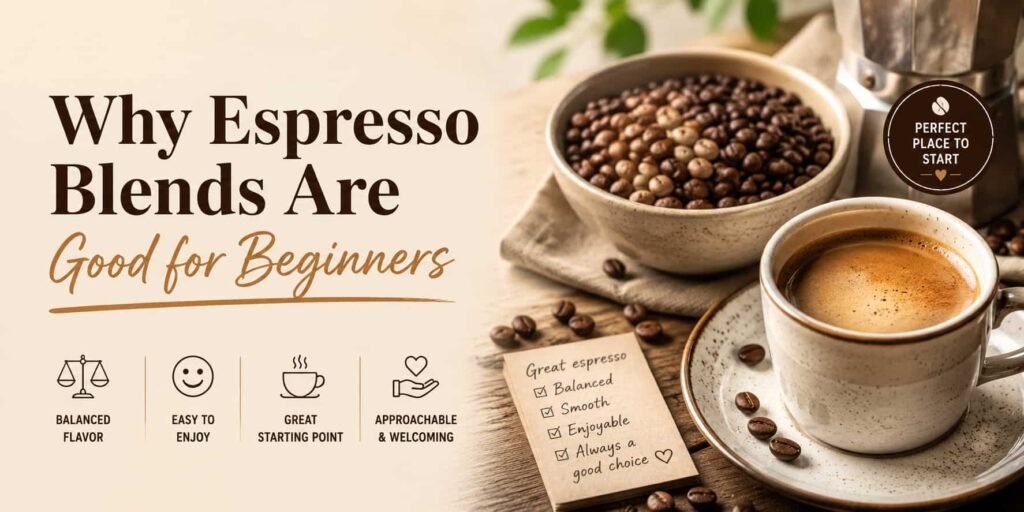
Because they are designed for espresso, these blends are more forgiving during grinding, tamping, and brewing. This makes them a practical starting point for anyone learning how to make a strong and flavorful espresso shot at home.
For beginners, the best choice is usually a fresh espresso blend with balanced acidity, smooth body, clean flavor, and good extraction consistency.
Are Espresso Beans Really a Special Type of Bean?
Many people believe that espresso coffee beans are a completely different type of bean made only for espresso brewing. In reality, espresso is a brewing method, not a specific coffee bean. Any quality coffee bean can be used for espresso if it is ground finely and brewed correctly under pressure.
Today, many roasters use a style called omni roasting, where coffee beans are roasted to work with different brewing methods, such as espresso, drip coffee, French press, and pour-over coffee. While this gives more flexibility, it can also confuse beginners who are still learning how to choose beans for their espresso machine.
If you choose beans that are not labeled as an espresso blend, you may end up with single-origin coffee beans or a lighter medium roast. These beans can taste bright, complex, and flavorful, but they are often harder to extract properly. They may require better control over grind size, dose, tamping pressure, water temperature, and espresso extraction time.
For new home baristas, an espresso blend is usually the safer choice. It is designed to produce a balanced espresso shot with rich aroma, smooth body, stable crema, and consistent flavor, even with basic equipment.
Read Also: Best Beans for Italian Espresso [2024 Buyer Guide]What to Consider Before Choosing Espresso Beans
Choosing the right espresso beans depends on more than just the coffee label. You should consider your espresso machine, your coffee grinder, your current brewing setup, your barista skills, and the type of espresso flavor you enjoy.
Although almost any coffee bean can be used for espresso brewing, beginners usually get better results with an espresso blend. These blends are designed to be more forgiving, especially for new home baristas using basic equipment. They can help produce a smoother espresso shot, better crema, balanced body, and more consistent coffee extraction.
Arabica vs. Robusta Beans for Espresso
Arabica coffee beans are popular because they usually have a sweeter, smoother, and more delicate flavor. They are often grown at higher altitudes and are commonly used in specialty coffee, premium espresso blends, and high-quality coffee drinks. Arabica beans normally contain less caffeine than Robusta beans and can offer more complex flavor notes, such as fruit, chocolate, nuts, or floral tones.
Robusta coffee beans have a stronger, bolder taste with higher caffeine content. They can taste slightly bitter, earthy, or intense, but when roasted properly, they can add rich body, strong aroma, and thick espresso crema. This is why Robusta is often used in espresso blends and some traditional Italian espresso recipes.
For a balanced cup, many espresso blends combine Arabica and Robusta beans. Arabica adds sweetness and complexity, while Robusta improves strength, body, caffeine level, and crema. The best choice depends on your taste preference, brewing equipment, and how strong you like your espresso.
Should Espresso Use Arabica, Robusta, or a Blend?
For espresso, there is no single rule that says you must choose only Arabica beans or only Robusta beans. Many high-quality espresso blends use both types of coffee beans to create a balanced and flavorful cup.
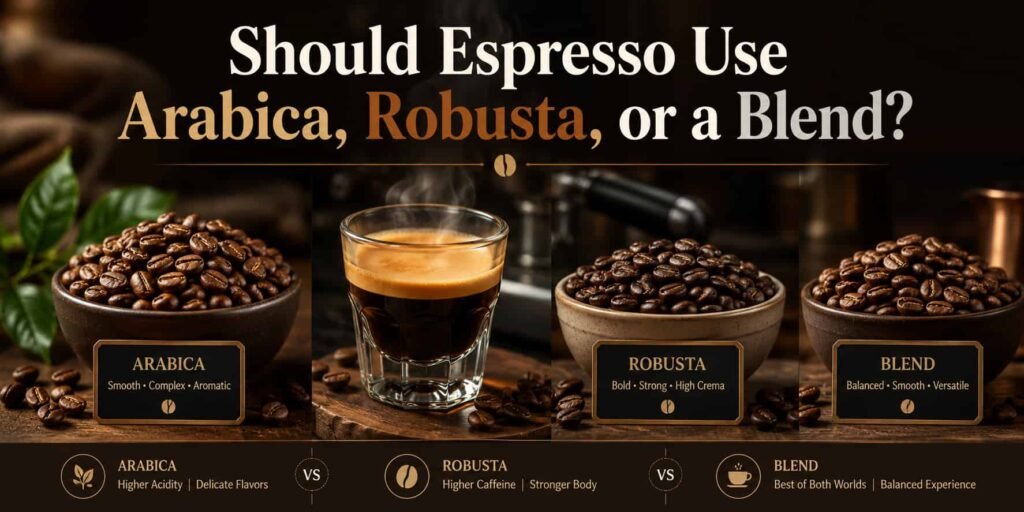
Arabica coffee beans can add sweetness, smoothness, aroma, and complex flavor notes, while Robusta coffee beans can improve body, strength, caffeine level, and thick crema. When both are roasted carefully, they can create a richer and more balanced espresso shot.
This is why coffee blends are often a strong choice for espresso brewing. They combine the best qualities of different origins, roast levels, and bean types. For example, premium blends such as Caffè Cartapani Espresso Casa may include beans from regions like South America and Asia, giving the coffee a full body, deep aroma, smooth taste, and consistent espresso extraction.
For most home baristas, a fresh Arabica-Robusta espresso blend is a practical option because it offers better balance, reliable crema, and a more enjoyable espresso experience.
Where to Find Quality Espresso Beans
The best espresso beans can come from different parts of the world. Some are made from Arabica coffee beans, while others use a balanced blend of Arabica and Robusta beans. Popular coffee-growing regions such as Ethiopia, Brazil, and Vietnam are known for producing beans with unique taste, aroma, body, and acidity. These differences often come from the local altitude, climate, soil, and farming methods.
However, when choosing non-oily espresso beans, the brand and roasting process are just as important as the country of origin. A good roaster can control the roast level carefully to create a smooth, flavorful, and machine-friendly espresso blend.
Why Italian Espresso Beans Are Popular
Italian espresso is respected because Italy has a long tradition of coffee roasting, espresso preparation, and café culture. Italian roasters often focus on balance, consistency, aroma, crema, and a rich espresso flavor. This makes Italian-style beans a strong choice for people who want a classic and reliable espresso shot.
Brands such as Caffè Cartapani are often valued for their traditional approach and careful roasting methods. Their blends are designed to deliver a balanced taste without excessive surface oil, making them suitable for home espresso machines.
Recommended Non-Oily Espresso Beans: Caffè Cartapani
Caffè Cartapani is a strong option for anyone looking for premium non-oily espresso beans. The brand uses a careful slow-roasting process that controls roast time and temperature to support consistent quality in every batch.
After roasting, the beans are packaged to help preserve freshness, aroma, and flavor. The result is an authentic Italian espresso blend with balanced roast depth, smooth body, rich crema, and clean taste.
For coffee lovers who want a flavorful espresso while protecting their grinder, portafilter, and espresso machine, Caffè Cartapani can be a reliable choice.
How to Brew Espresso Beans for Better Flavor
Good espresso brewing depends on more than the quality of the beans. Even if you choose premium espresso beans, the way you grind and brew them has a major effect on the final coffee flavor, aroma, body, and crema.
Start with freshly ground coffee beans whenever possible. Grinding the beans just before brewing helps preserve their natural oils, freshness, and full flavor profile. For the best results, grind your beans each morning. If daily grinding is not possible, try to grind only enough coffee for a few days instead of storing large amounts of ground coffee.
Water quality is also important. Always use filtered water when making espresso because it removes unwanted impurities, minerals, and odors that can affect the taste. Poor-quality water can make your espresso taste flat, harsh, or unbalanced.
For a cleaner and smoother espresso shot, use fresh non-oily espresso beans, a consistent grind size, and clean filtered water. These simple steps can improve espresso extraction, protect your espresso machine, and help you enjoy a richer cup every morning.
Final Thought
Choosing the best non-oily espresso beans can make your coffee taste cleaner, smoother, and more balanced.Fresh medium roast espresso beans are often a smart choice because they offer rich flavor without too much oily residue.They also help protect your espresso machine, coffee grinder, portafilter, and brewing parts from buildup.For beginners, a quality espresso blend made with Arabica and Robusta beans can give better crema, body, and extraction consistency.Always use freshly ground beans and filtered water to improve aroma, taste, and overall espresso quality.With the right beans and brewing habits, you can enjoy a fresh, flavorful, and machine-friendly espresso shot at home.
FAQ’s: Best Non-Oily Espresso Beans [2024 Guide]
What are espresso beans?
Espresso beans are coffee beans roasted to create a strong, rich, and bold flavor for espresso brewing. They usually come from Arabica or Robusta beans. The main difference is not the bean itself, but the roast level, flavor profile, and grind size used to make a concentrated espresso shot.
Who makes the best espresso beans?
The best espresso beans depend on your taste, but Partners Coffee Roasters, George Howell, and Ritual Coffee are strong choices for high-quality espresso. Partners Coffee Roasters Bedford Espresso is a popular option because it produces smooth, rich, and balanced espresso shots with a bold coffee flavor and pleasant aroma.
What are the best coffee beans for espresso?
The best coffee beans for espresso are fresh whole-bean coffee, not pre-ground coffee. Whole beans keep more aroma, flavor, and freshness, which helps create a better espresso shot with rich crema. You do not always need expensive single-origin coffee, organic beans, or a dark roast. The most important thing is to use high-quality fresh beans, grind them finely before brewing, and choose a roast level that matches your taste.
Where did espresso originate?
Espresso came from Italy, where it became a major part of coffee culture. Early coffee makers and brewing ideas from France also helped shape the development of modern espresso machines. Espresso is made by forcing a small amount of nearly boiling water under high pressure through finely ground coffee beans, creating a strong, rich, and flavorful coffee drink.
What is the cultural importance of espresso?
Espresso is important because it is more than just a coffee drink. It has shaped Italian coffee culture, modern coffee shops, and the third-wave coffee movement, which focuses on high-quality coffee beans, careful roasting, skilled baristas, and artisanal brewing. Espresso also represents social connection, quick service, and the tradition of enjoying rich, strong coffee in everyday life.