
![Espresso vs Coffee More Caffeine [Real Facts]](https://caffeinecue.com/wp-content/uploads/2026/06/Espresso-vs-Coffee-More-Caffeine-Real-Facts-1024x512.jpg)
Espresso vs Coffee: Which Has More Caffeine?
Espresso has more caffeine concentration than regular brewed coffee when measured ounce by ounce. According to the U.S. Department of Agriculture, one ounce of espresso contains about 63 mg of caffeine.
Regular coffee usually has around 12 to 16 mg of caffeine per ounce. This means espresso is much stronger in caffeine content for the same amount of liquid.
However, people usually drink coffee in larger cups. So, a full cup of regular coffee may contain more total caffeine than a small shot of espresso.
In simple words, espresso is stronger per ounce, but coffee may have more caffeine overall depending on the serving size.
Espresso and Coffee: Key Differences Explained
When comparing espresso and coffee, the main difference comes from the brewing method, taste, and drink preparation. At a coffee shop, you may see many coffee drinks, but espresso and regular brewed coffee are prepared in different ways.
Espresso can be made from the same coffee beans used for regular coffee. However, some brands sell special espresso beans that are roasted to create a richer flavor profile, stronger aroma, and smoother coffee texture.
These espresso roasts are often processed differently from beans used for drip coffee. The goal is to produce a bold, concentrated coffee flavor that works well in small servings and popular espresso-based drinks like lattes, cappuccinos, and macchiatos.
Espresso vs Coffee: Brewing Method, Taste, and Caffeine
The biggest difference between espresso and coffee is the brewing method. Espresso is made with an espresso machine that forces hot water through finely ground coffee packed tightly under high pressure.
This method creates a small, strong drink with a bold coffee flavor, rich aroma, and smooth creamy texture. Regular drip coffee is made differently. In this process, hot water slowly passes through coarser coffee grounds, which produces a lighter and less concentrated drink.
Espresso usually has a higher caffeine concentration because it is more condensed. The coffee beans may have similar caffeine levels, but espresso delivers more caffeine per ounce in a smaller serving.
So, when you visit a café, remember that espresso and regular coffee both offer enjoyable taste, energy boost, and caffeine intake, but they are not the same. They have different flavor profiles, strengths, textures, and uses in coffee recipes.
Trying both drinks can help you decide which one matches your taste preference, caffeine needs, and daily coffee routine.
Espresso vs Coffee: Caffeine, Taste, and Drink Style
Many people enjoy coffee because of its rich flavor, pleasant aroma, and natural energy boost. Among different coffee drinks, espresso is one of the most popular choices, especially for people who like a stronger and more concentrated taste.
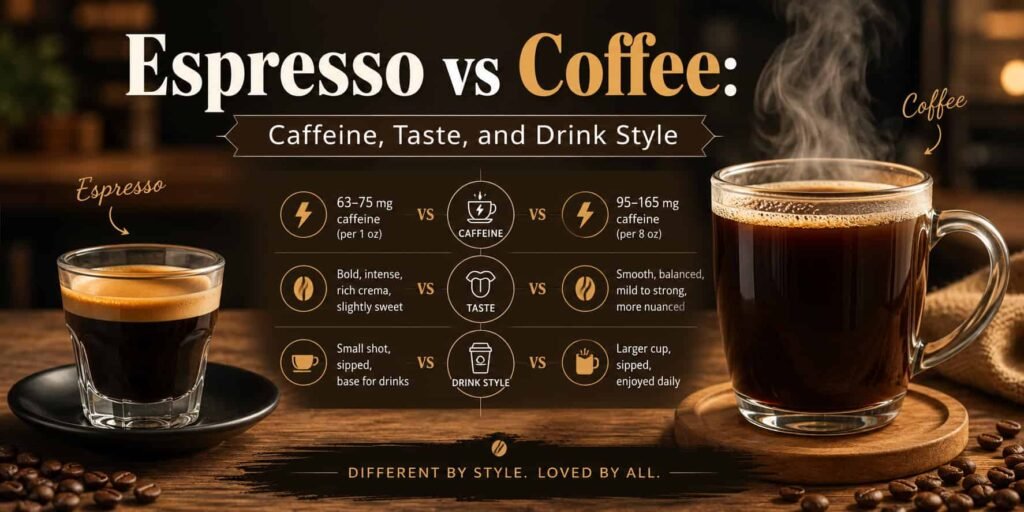
A common question is whether espresso has more caffeine than regular coffee. Many people think espresso has much more caffeine because it tastes bold and intense. However, the answer depends on how you measure it. Espresso usually has more caffeine per ounce, but a full cup of regular brewed coffee may contain more total caffeine because the serving size is larger.
Espresso and Americano: Main Difference
Espresso is both a coffee drink and a brewing method. It is made by forcing hot water through finely ground coffee beans under high pressure. This creates a small, strong coffee shot with a deep flavor profile, thick texture, and rich coffee aroma.
An Americano is different because it starts with espresso but is mixed with hot water. This makes the drink smoother, lighter, and closer in taste to regular black coffee. In simple words, espresso is concentrated, while an Americano is diluted espresso served as a larger drink.
Understanding these differences can help you choose the right coffee beverage based on your taste preference, caffeine intake, and daily coffee routine.
Americano Taste and Strength
An Americano is made by adding hot water to a shot of espresso. This creates a smoother and lighter coffee drink while keeping almost the same caffeine content as the original espresso shot.
Because water is added, an Americano tastes less strong than pure espresso. It has a milder flavor, softer body, and a strength that feels closer to regular drip coffee. However, it is still different from a straight espresso shot, which has a bold, rich, and concentrated taste.
In simple words, both drinks start with espresso, but an Americano gives a lighter and more balanced drinking experience.
Espresso and Coffee Caffeine Comparison
Many people wonder whether espresso or regular coffee has more caffeine.
A single espresso shot, which is about 1 fluid ounce, usually contains around 63 milligrams of caffeine. In comparison, an 8-ounce cup of brewed coffee often contains about 90 to 200 milligrams of caffeine. A regular can of soda usually has about 35 to 45 milligrams of caffeine.
This means brewed coffee may have more total caffeine because the serving size is larger. However, espresso has more caffeine per ounce, making it a stronger and more concentrated coffee beverage.
Americano Flavor and Espresso Strength
An Americano is made by adding hot water to a shot of espresso. This creates a smoother and lighter coffee beverage while keeping almost the same caffeine content as the original espresso shot.
Because water is added, an Americano has a milder flavor and softer body than pure espresso. Its taste is closer to regular drip coffee, but it still has the rich base of espresso. A straight espresso shot, however, is stronger, thicker, and more intense because it is not diluted.
In simple terms, both drinks begin with espresso, but an Americano gives a lighter, less concentrated, and easier-to-drink coffee experience.
Read Also: Does Sierra Mist Have Caffeine? [2024 Truth]Espresso vs Coffee: Caffeine Difference
Many coffee lovers want to know whether espresso or regular coffee has more caffeine.
A single espresso shot is usually about 1 fluid ounce and contains around 63 milligrams of caffeine. On the other hand, an 8-ounce cup of brewed coffee often contains about 90 to 200 milligrams of caffeine. A regular can of soda usually has around 35 to 45 milligrams of caffeine.
This means brewed coffee may have more total caffeine because the serving size is larger. However, espresso has more caffeine per ounce, making it a more concentrated coffee drink.
How Much Caffeine Is in Brewed Coffee?
A standard 8-ounce cup of brewed coffee usually contains a little over 90 milligrams of caffeine. This equals almost 12 milligrams of caffeine per fluid ounce.
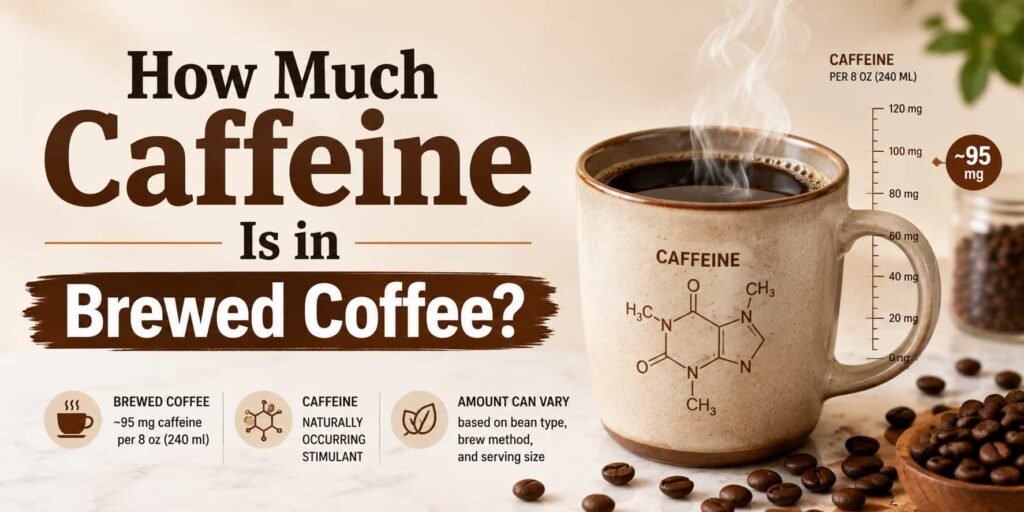
Compared to this, espresso delivers much more caffeine in a smaller amount. That is why espresso tastes stronger and feels more intense, even though the serving size is small.
Safe Daily Caffeine Intake
For most healthy adults, the recommended daily caffeine limit is about 400 milligrams. Based on this amount, a person could usually drink around four cups of brewed coffee or about seven to eight espresso shots in one day without going above the general guideline.
Still, every person reacts to caffeine differently. Some people may feel alert after one cup, while others may need more to feel the same effect.
What Affects Caffeine Levels in Coffee?
The caffeine level in coffee is not always the same. It can change because of several factors, including the coffee bean variety, roast level, grind size, brewing method, and serving size.
For example, different coffee beans can naturally contain different amounts of caffeine. The way the coffee is roasted, ground, and prepared can also affect the final caffeine content in your cup.
Understanding these factors can help you make better choices the next time you order espresso, Americano, or regular brewed coffee at a café.
Americano Taste and Espresso Strength
An Americano is made by adding hot water to a shot of espresso. This creates a smoother and lighter coffee drink while keeping almost the same caffeine content as the original espresso shot.
Because water is added, an Americano has a milder flavor and lighter body than pure espresso. Its strength feels closer to regular drip coffee, but the taste is less intense than a straight espresso shot.
In simple words, both drinks are based on espresso, but an Americano gives a softer, more balanced, and easier-to-drink coffee experience.
Espresso vs Coffee: Caffeine Comparison
Many people ask whether espresso or regular coffee has more caffeine.
A single espresso shot is about 1 fluid ounce and usually contains around 63 milligrams of caffeine. In comparison, an 8-ounce cup of brewed coffee can contain about 90 to 200 milligrams of caffeine. A regular can of soda usually has around 35 to 45 milligrams of caffeine.
This means espresso has more caffeine per ounce, while brewed coffee may have more total caffeine because people usually drink it in larger servings.
What Affects Caffeine in Coffee?
The caffeine content in coffee is not always the same. It can change depending on the coffee bean type, roast level, grind size, brewing method, and serving size.
Coffee Bean Type
Different coffee beans contain different levels of caffeine. Arabica beans usually have less caffeine than Robusta beans. This is partly because of natural genetic differences between the two bean types.
Arabica coffee often grows at higher elevations and develops more slowly. It naturally produces less caffeine than Robusta coffee, which is generally stronger, more bitter, and higher in caffeine.
Roast Level
Many people believe light roast coffee has more caffeine than dark roast coffee because light-roasted beans are denser and lose less mass during roasting.
However, the difference is usually small. Espresso is often made with medium roast or dark roast coffee because these roasts dissolve more easily during brewing and allow faster coffee extraction.
Grind Size
The grind size also affects how much caffeine is extracted from coffee.
A fine grind exposes more surface area to water, so caffeine is released faster. This can create a stronger and more concentrated drink. However, if the grind is too fine, water may move too slowly through the coffee, causing over-extraction and a bitter taste.
A coarse grind exposes less surface area, so the coffee may taste lighter and contain less extracted caffeine. Choosing the right coffee grind helps create a balanced cup that is not too bitter, too weak, or too strong.
Final Thought
In the end, espresso and regular coffee both provide caffeine, but they differ in strength, serving size, and taste. Espresso has more caffeine per ounce, making it stronger and more concentrated. However, a full cup of brewed coffee may contain more total caffeine because it is served in a larger amount. Drinks like Americano, latte, and cappuccino use espresso as a base but offer different flavors and textures. The final caffeine content also depends on the coffee beans, roast level, grind size, and brewing method. Choosing the right drink depends on your taste preference, caffeine needs, and daily coffee routine.
FAQ’s: Espresso vs Coffee: More Caffeine? [Real Facts]
How much caffeine is in a cup of espresso?
A single espresso shot usually contains about 63 milligrams of caffeine. Although a regular 8-ounce coffee has around 95 milligrams of caffeine, espresso has more caffeine concentration per ounce. This means espresso is stronger in a smaller serving, while regular coffee has more total caffeine because the cup size is larger.
What is the difference between espresso and coffee?
Espresso is a small, concentrated coffee drink made by forcing hot water through finely ground coffee beans. It has a bold flavor, rich aroma, and quick caffeine boost. Regular coffee is usually lighter, milder, and served in a larger cup. Its caffeine level depends on the brewing method, cup size, and type of coffee grounds used.
Is espresso stronger than regular coffee?
Yes, espresso is stronger than regular coffee when measured per ounce because it has a higher caffeine concentration and a more intense flavor. However, espresso is usually served in a small shot, while regular coffee comes in a larger cup, so the total caffeine intake can sometimes be higher in brewed coffee.
Why might regular coffee be a better choice than espresso?
Regular coffee may be better for people who prefer a smoother, milder, and more balanced coffee flavor. It is brewed slowly with less pressure and coarser coffee grounds, which makes it less intense and usually less bitter than espresso. However, the better choice depends on your taste, preferred caffeine strength, and daily coffee routine.
Can you make espresso with regular coffee?
You cannot make true espresso from regular coffee unless you use finely ground coffee beans and an espresso machine that brews with high pressure. Regular coffee can taste strong, but it will not have the same rich crema, bold flavor, and concentrated caffeine as real espresso. For the closest espresso-style coffee, a Moka pot is a good option.